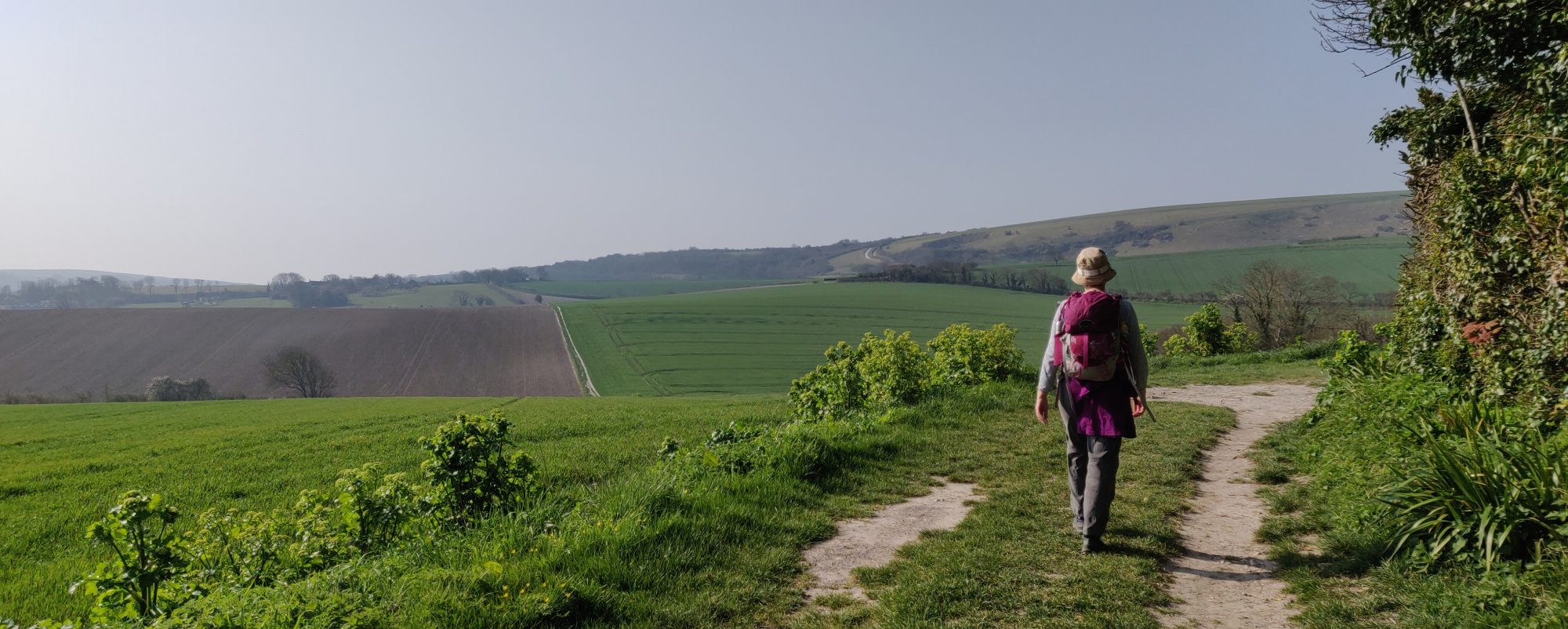
I went North right to the tip of the north island to marvel at the South Pacific Ocean. It took three hours to get there. The area although not very populated it is very farmed. Lots of scrubby meadows and areas of avocado plantations. The soil is poorer here and was soon to see why. Where it’s low lying it’s marshy and higher ground is full of boulders. It was raining on and off so it was difficult to see much of the distant hills.
Where is wasn’t farm land there was a sort of woodland although quite low ( looking more like a heath) due to the winds I think. I think a lot of this land is owned by the Maori.
Once I got to there the clouds suddenly cleared.
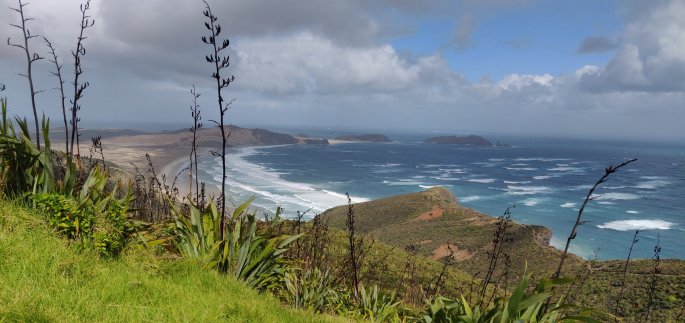
Te Rerenga Wairua or Cape Regina has significance for the Maori. It is where their spirits come before the depart across the sea to there eternal home. I suspect a few poor souls had a early journey, the waters are treacherous and there is a ferocious wind.
A very different landscape here. On the West looking out to the Tasman Sea, huge sand dunes and I mean colossal. A volcano had belched out this sand an age ago and it’s been blowing into the hills ever since. Vegetation has taken hold eventually but the sand often becomes exposed again.
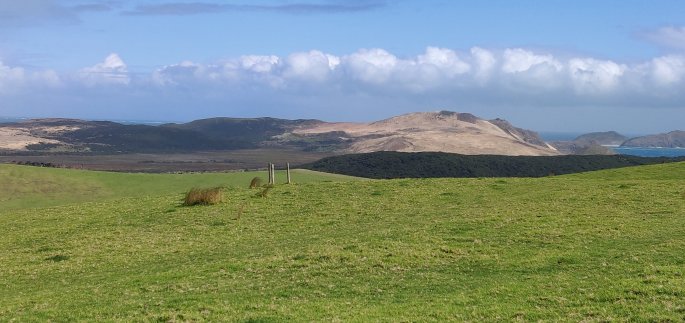
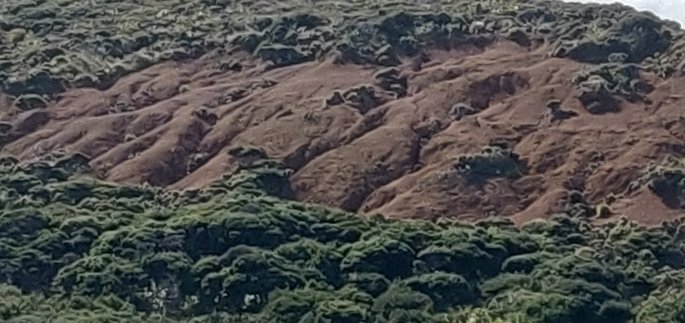
On the East there is a ridge of limestone hills.
If you remember on one of my walks I had to disinfect my footwear to prevent Kauri dieback. What is a Kauri? I didn’t see one and they are New Zealand’s longest living tree, a monument to nature so I went to visit a forest full of them the following day.
On the west coast but within a ridge of mountains. It was surprisingly cold although it doesn’t drop much below 7 degrees at night.
The woodland is very mixed with other trees such as rimru (another conifer with long drooping leaves) and full of ferns including tree ferns. I think one was a kind of bracken and another a hard water fern, however after that I’m lost. The walks to these trees is on raised paths or boardwalks because the roots of the Kauri are on the surface and very sensitive to footfall. Evolution is amazing, I guess in a land of birds there were not many heavyweight ground dwellers. The Moa being the exception and that probably preferred more open terrain when it was alive.
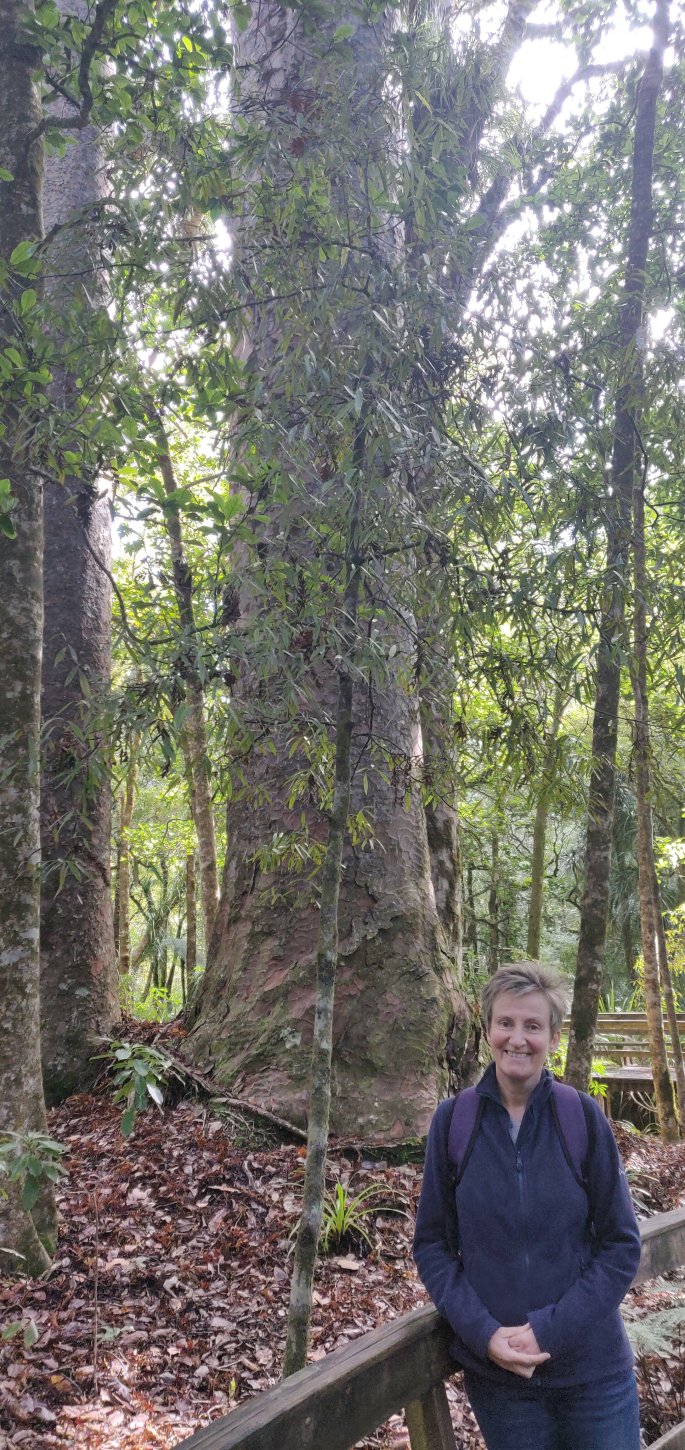
The Kauri are impressive, not just for there height (up to 50 meters) but also their girth. Much like our old oaks and yews. The Kauri are coniferous, but you’d be hard pressed to tell. They have board needle type leaves and the only real nod to a conifer is the bark which reminded me of older pines. They can live for two thousand years on their over sensitive root system.
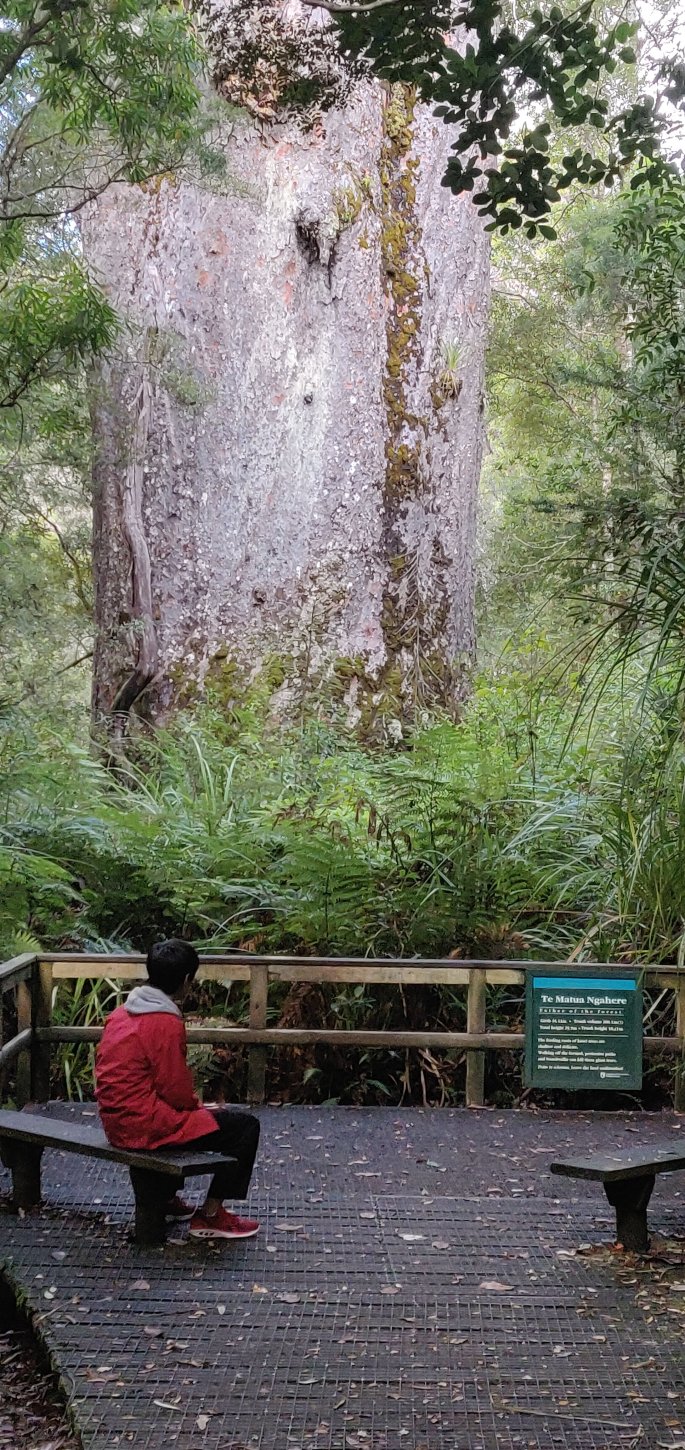
I saw this Father Kauri (apparently there is a God one somewhere too) in comparative silence as befits it’s grandeur but as I left, a Japanese boy came running along the twisting the boardwalk, he was so astounded by the size of this tree he shrieked! That made me laugh out loud!
 The Travelling Bee
Oh my, and now all this chatter about long drooping, height, girth, hard pressed and shrieking!! Did you mean big trees or big tease? Keep enjoying!! 😘
LikeLike
Disappointing but no innuendo intended!
LikeLike
Kauri Dieback? Sounds like a Bruce Willis film ready in the making! LOL I’m Sure that Lee would have been raising an eyebrow or two at any slight thought of innuendoes and made the most of teasing you 😂😂😂
LikeLike
I’m sure he would. 🤭
LikeLike