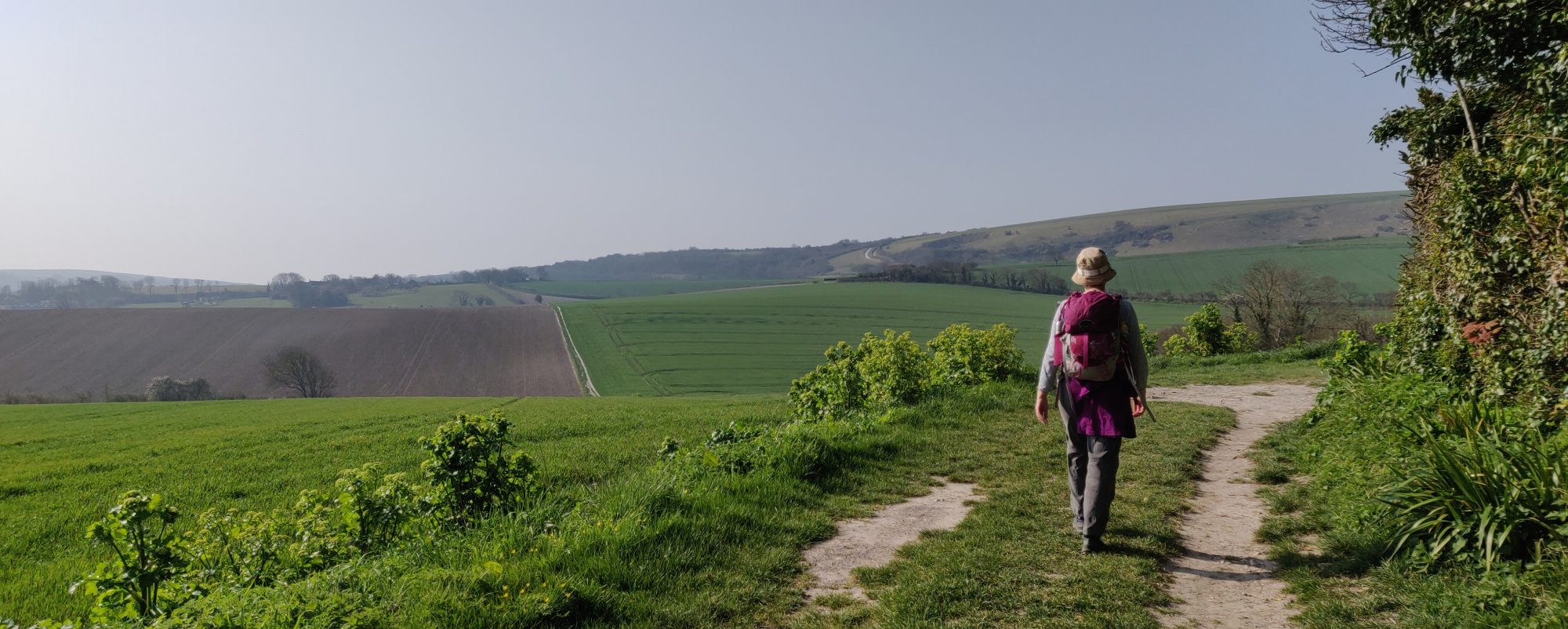
Heading off to the Terai with a group of bird watchers is a thing to behold. I do wonder what the collective term for bird watchers is? A ‘Twitch’ of bird watcher’s maybe? They completely monopolised the only window in departures ‘birding’ furiously (Is that even a verb?) We had quite a few people trying to see what all the commotion was about. I valiantly tried to tell them in my best Nepali and left them looking very mystified.
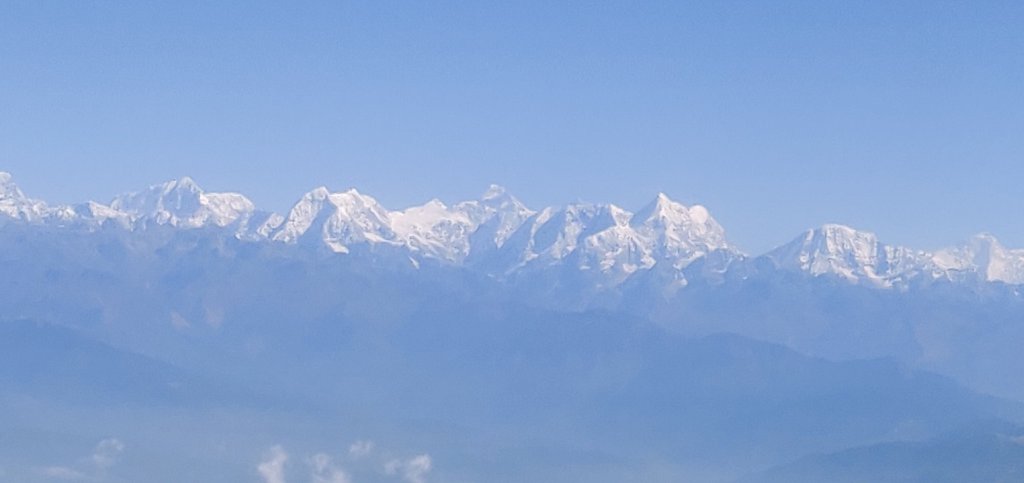
Our flight was delayed due to mist in the Terai. Eventually we took off in a small aircraft and with more spectacular veiws of the Himalayas including Everest and Kanchenjunga.
Arrivals at Biratnagar airport had the smallest most chaotic baggage collection I’ve ever seen but it worked and no ones luggage went missing!
The Terai is an area of plains and low land that borders India to the south of Nepal. It is mostly flat alough there are areas undulating hills. I would descibe the forests as temperate rain forest and there are areas of grass land and swamp. Proper Rudyard Kipling jungle.
This is an area that is steadily being taken over by agriculture in all its forms. The agricultural areas seem heavily populated.
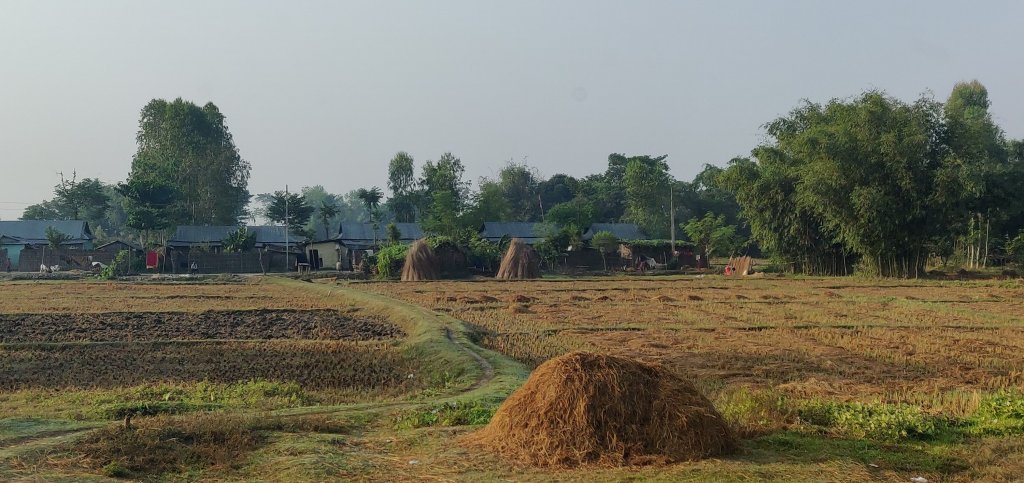
Many people are subsistance farmers and I’ve never seen anything like it, we were probably living like this 300 years ago. Each of the homes have very small cows, several goats and maybe chickens and all live cheek by jowl ( I dont think I’ve ever written that word before and it looks odd) in the homestead. Nothing is wasted and the poorer homes are wattle and daub (or the equivalent) many have little kitchen gardens and they work in paddy fields.
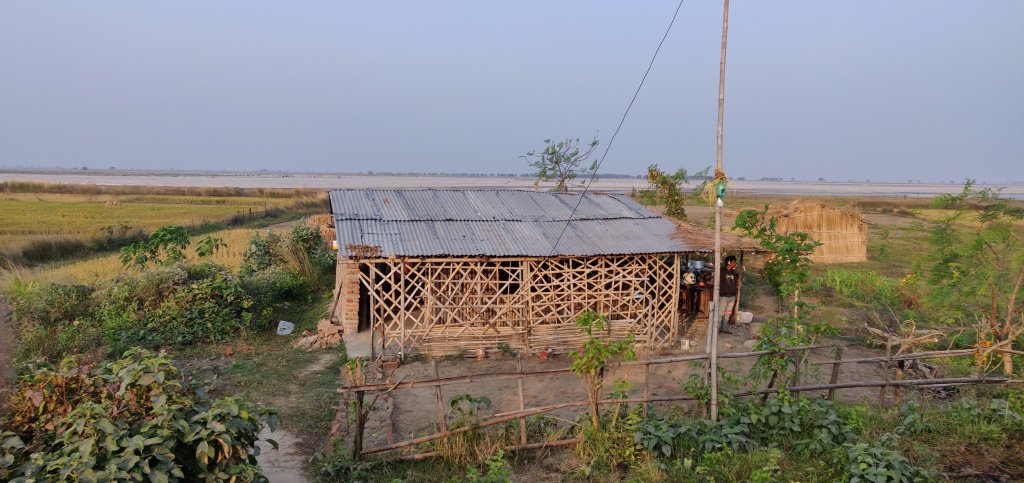
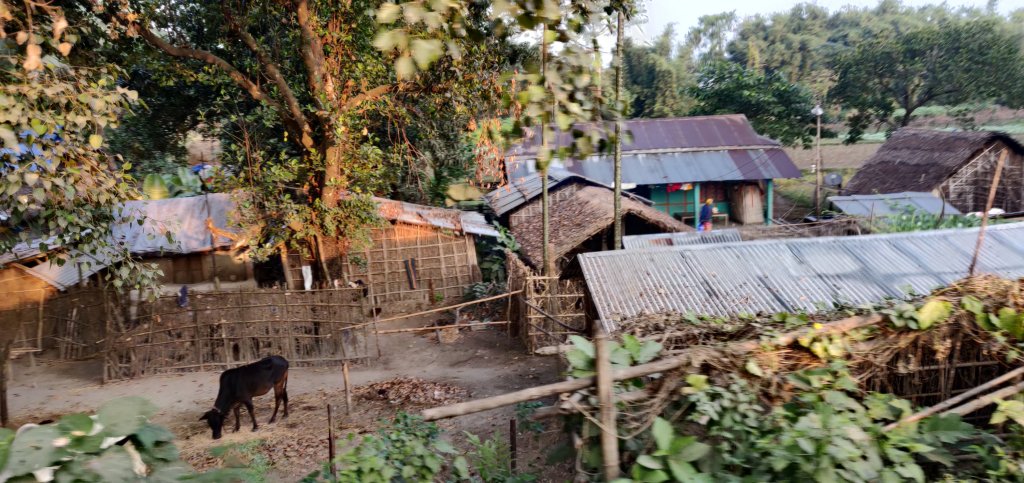
I can imagine life is very hard, with no electric although some do have it and they seem to have a stand pipe at every other property. The people are quite beautiful, the women in this area are so bright in their pink red and orange sari’s, the Indian influence with the Indian border not being that far away. The children wave at you and shout ‘Namaste’ with big beaming smiles. Going through some of towns the buildings are more substantial and the children can be seen in their pristine uniforms walking proudly to school.
The rice is hand harvested and even the threshing does not seem to be mechanised in many places. This is a place where the present and past collide.

The rather shocking thing is the litter, its everywhere! I understand that the infrastructure for rubbish clearance is not up together but, there is work underway to sort this out. The people try to burn it but they are getting swamped. Our guide said that some young activists are pushing for proper collection, recycling and disposal, they are only just gaining momentum.
I’m going to take a time catching up, who knew birdwatching was so time consuming and tiring? More to come about our actual excursions shortly.
 The Travelling Bee