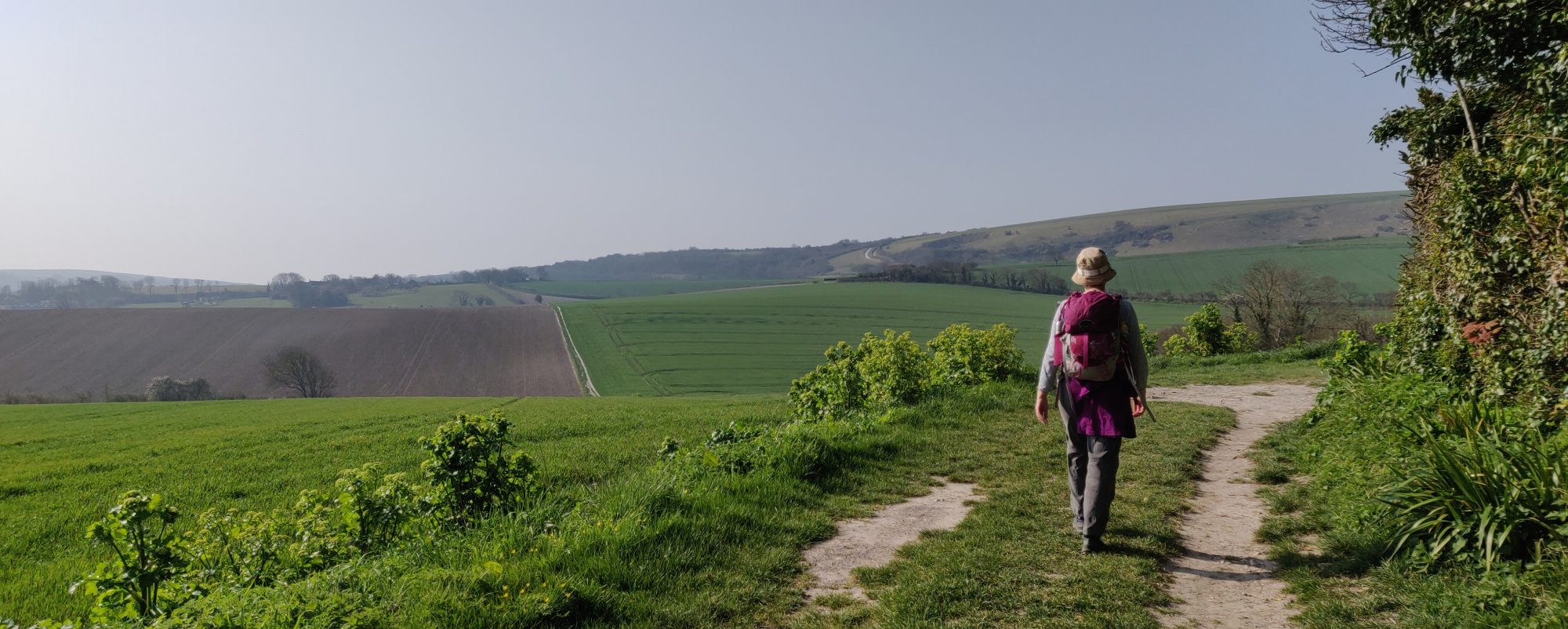
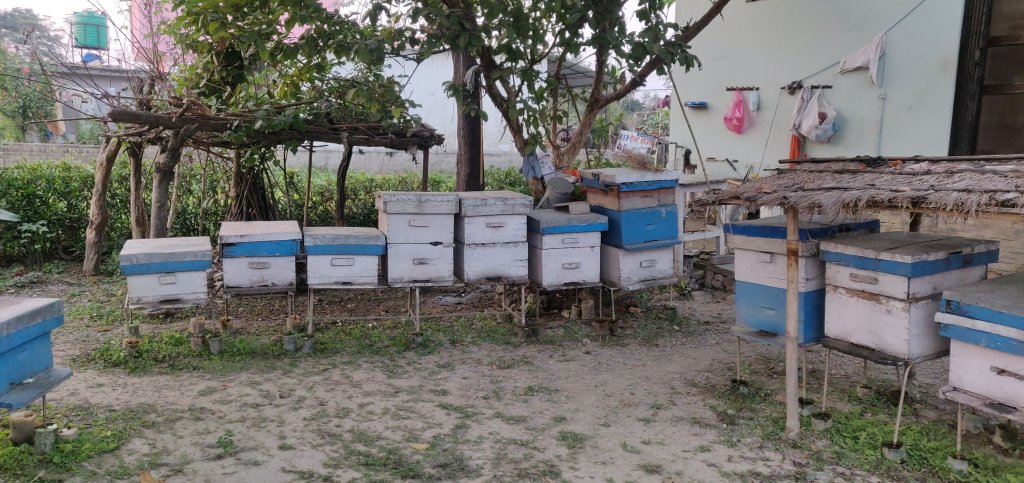
On the way back from Lumbini, we visited Durga’s Brother in-law Anil, he keeps bees. Thus is of interest to me and I know Durga is keen to have an apiary on his farm.
Anil wasnt there when we arrived but his mother was, the tiniest, oldest, looking woman I ever saw! She also had no English and no fear (clearly these go hand in hand) as she opened one of the 70 odd hives, with no gloves, no head gear and I didnt have any either so I kind of just had to go with it. Durga disappeared inside.
The bees are incredibly docile, small about two thirds the size of ours and distinctly banded yellow and black. I asked the questions I could but, my language skills were not up to it Im afraid.
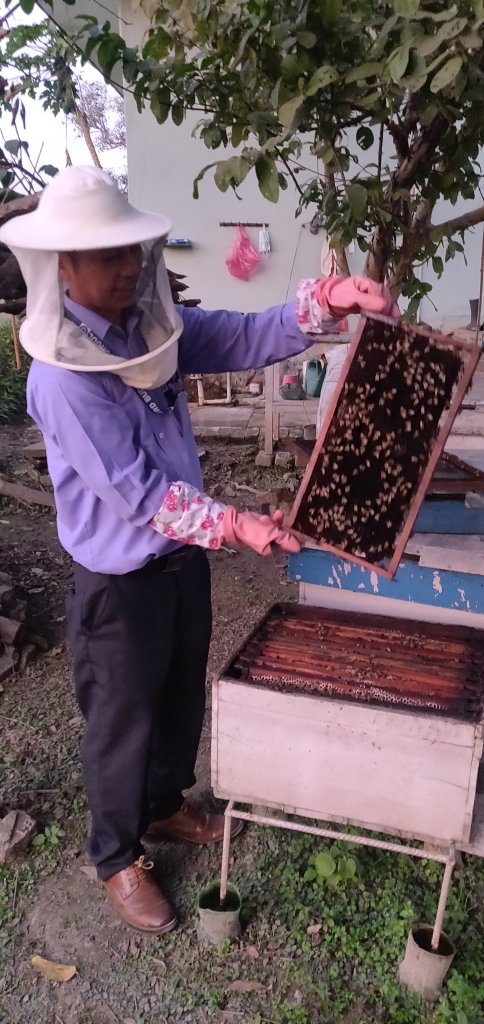
Later Anil arrived and then we donned the gear and I got proper look inside. Durga was nowhere to be seen!
The hive is much the same as the UK ones, slightly smaller. The bee is the same Apis Mellifera, European honey bee but, these are so docile. The whole apiary is big for a hobbyist and I noted no hive hygiene practices here.
I was struck by the amount of times honey can be harvested, four times a year and average 20 kg often more at a time, that is phenomenal.
The monsoon is when they need to feed their bees, when it’s far to wet for them to fly! This gives a much longer production year than the UK, I wonder what it’s like further up in the mountains where the season is similar to ours?

Then Anil showed me a bee colony on one of his porches, Apis dorsata the Giant Honey Bee.
These are becoming rare and they are very agressive. They are about 2 cm in lenght and hang in trees, cliffs and in this case a porch. They cannot be treated like the other honey bees and housed as such but, the honey and wax have been utilized by human honey hunters. I have read the bee can heat their thorax up to huge temperatures to kill invading wasps.
I didn’t go anwhere near the colony although I wanted to. Not without full body and head kit.
I’ll leave that to little old women with no fear!

 The Travelling Bee