For me this place was one of the highlights of our journey in South Korea.
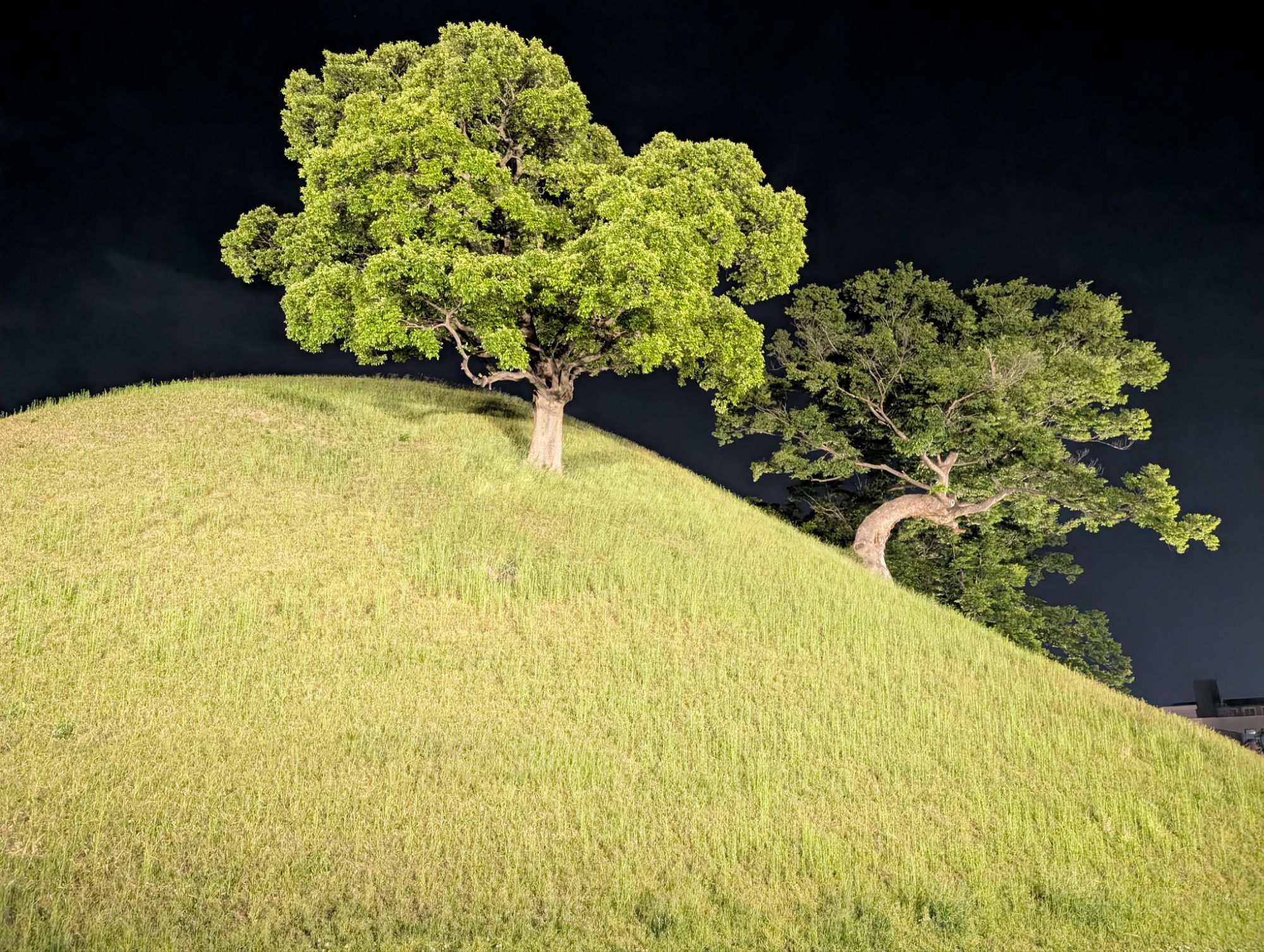
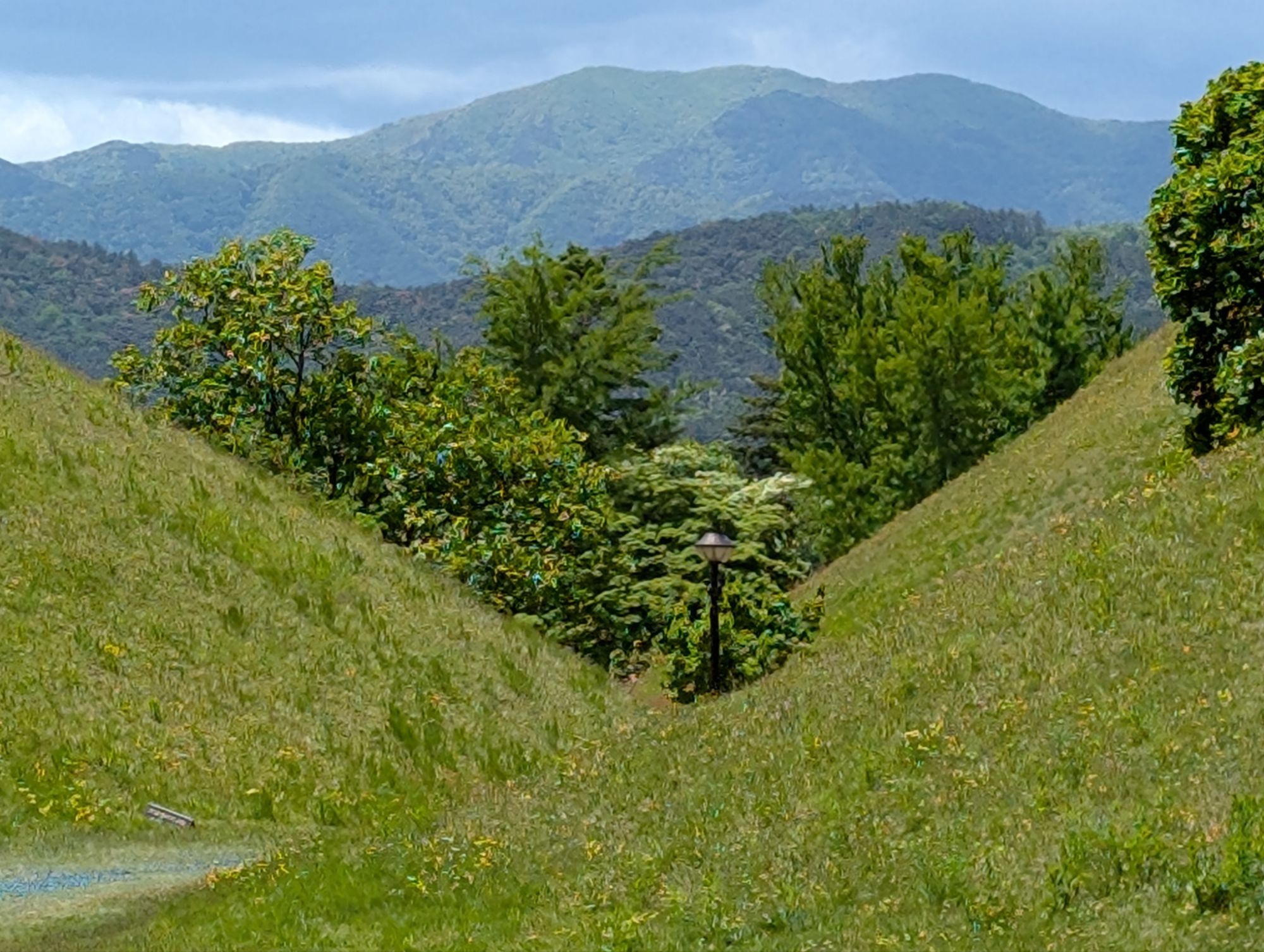
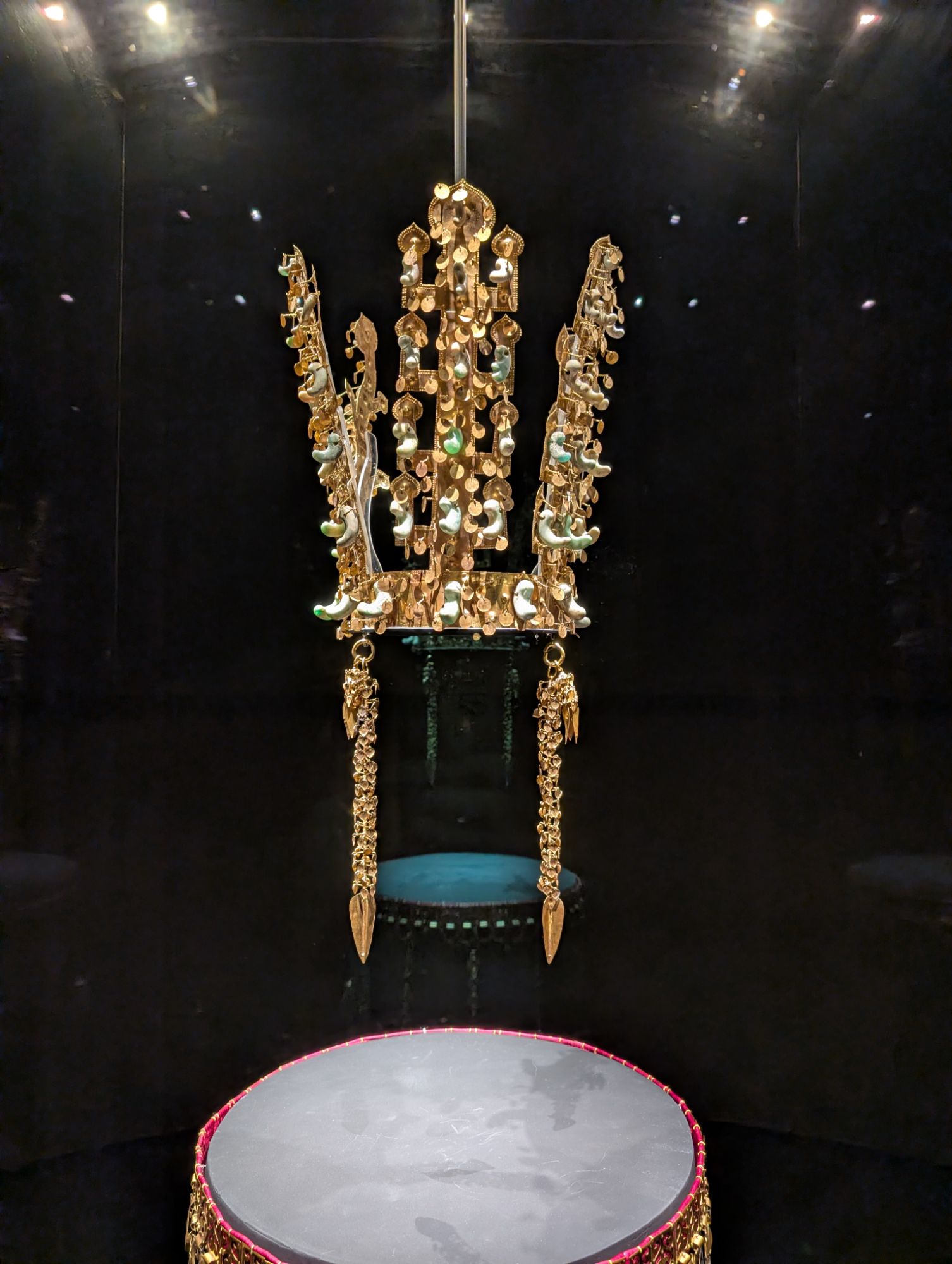
If you live in Europe you are probably familiar with tumuli or barrows, earth and stone burial mounds. Gyeongju has approximately 150 burial mounds from the Silla period (57 BCE to 935 CE) and they are huge. It was large city in that time, with nearly a million people and the mounds relate to Royal burials. Many of the mounds have been found to have extraordinary grave goods, including golden crowns etc. All of them have the penalty of imprisonment if you climb on them, no ‘Roly-poly’ for me then!

We had a couple of days here exploring the locality. We got a glimpse of the mounds the night we arrived but the first day we went to Yangdong traditional village a few kilometres away.

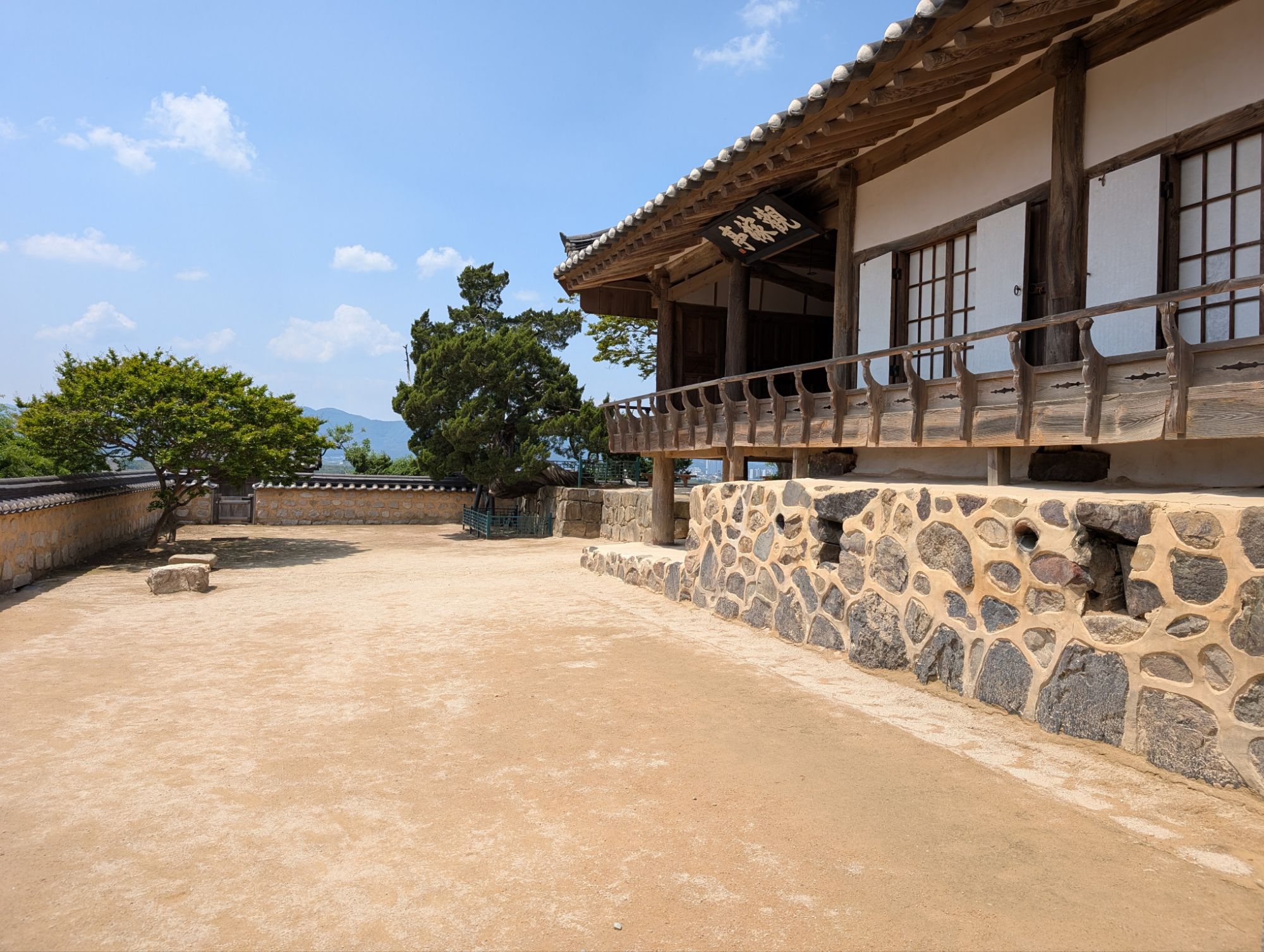
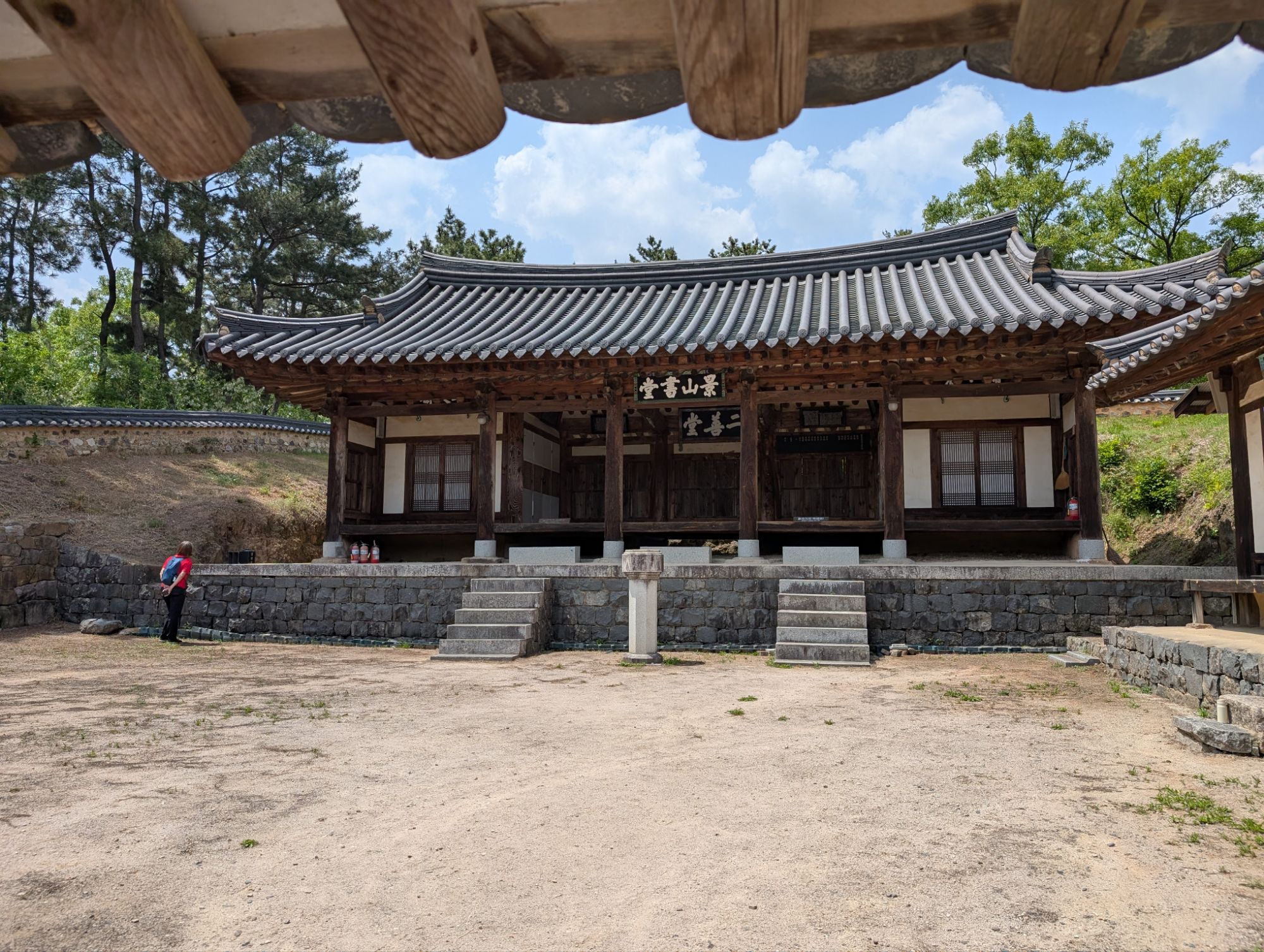
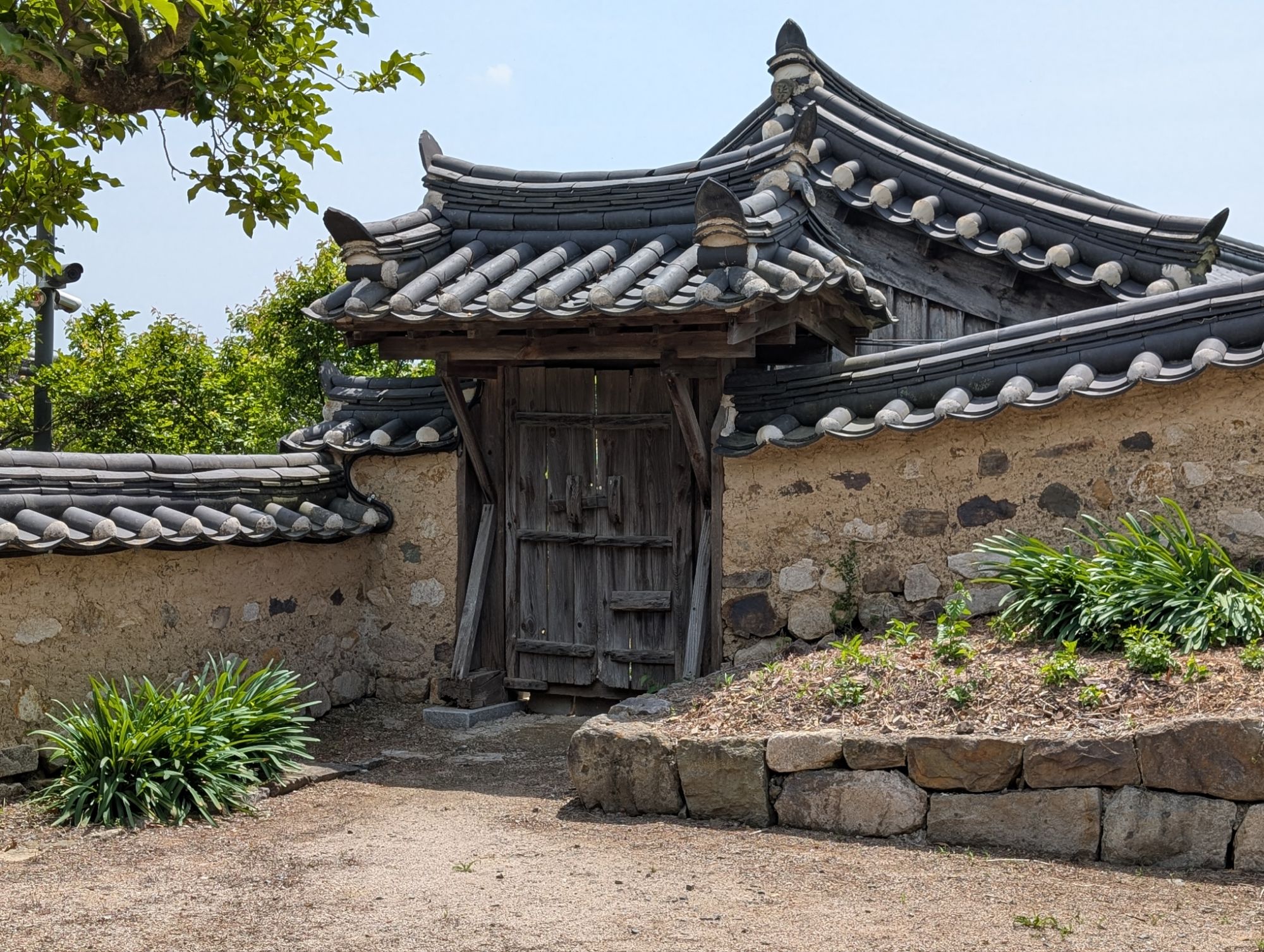
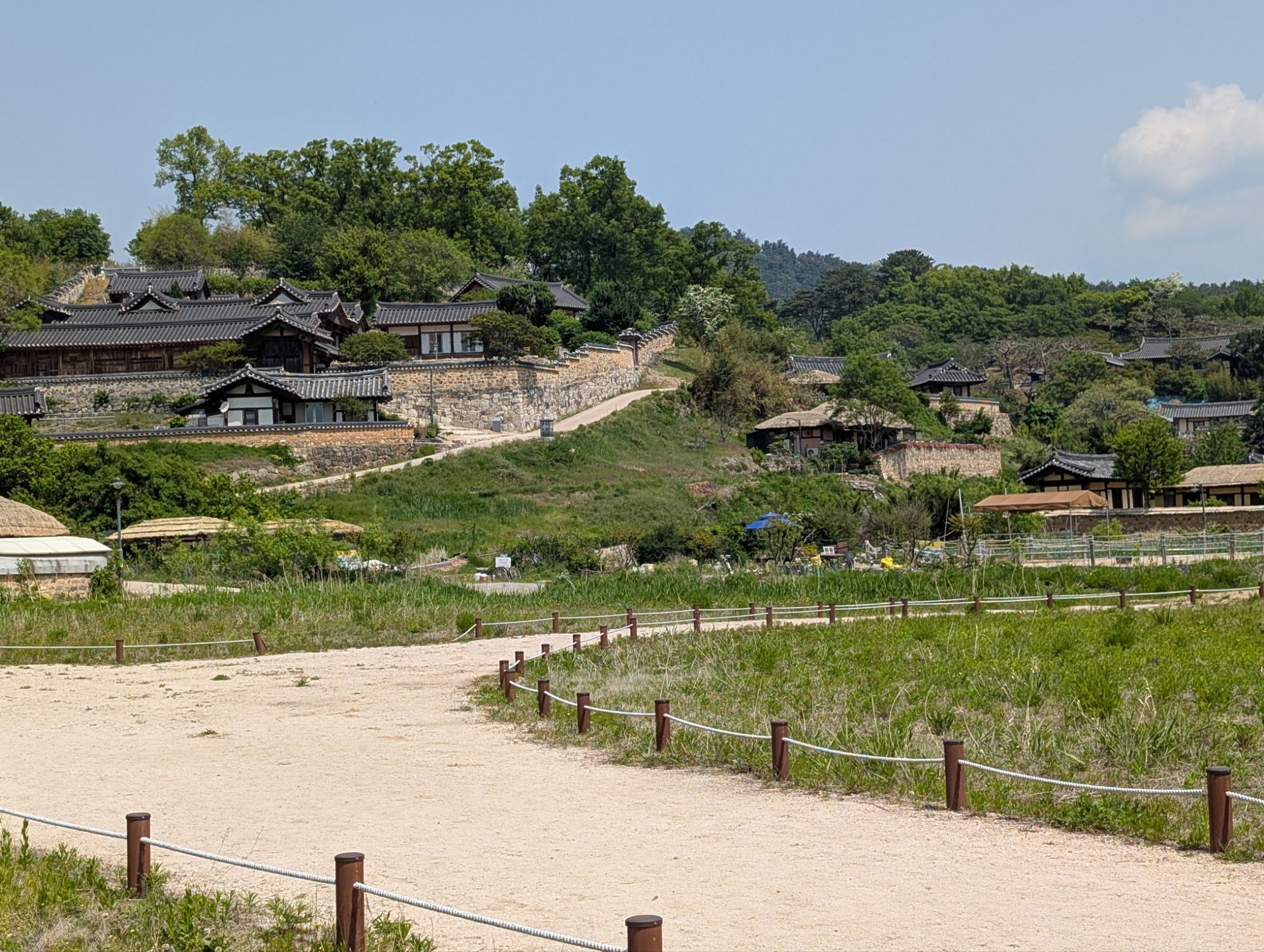
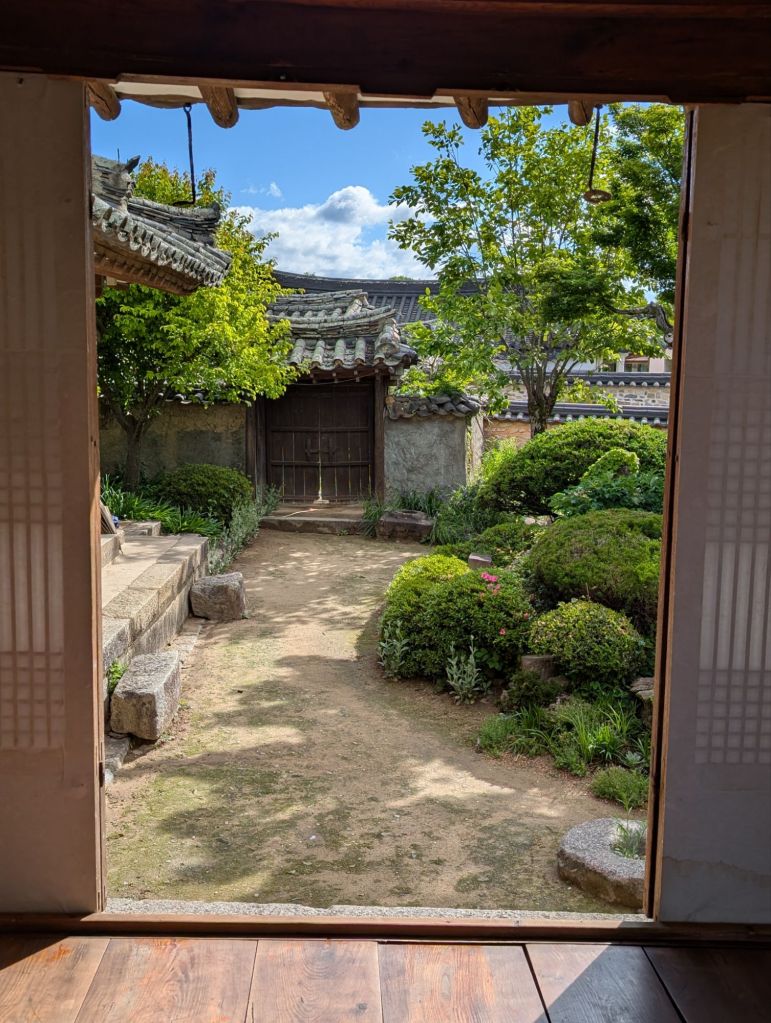
This was lovely, with Hanocks, both with tiled (the richer houses) and thatched roofs (rice straw). It had a feeling of Hobitton about it as there were small fields dotted about it. Only older people actually live here now and it’s a UNESCO world Heritage Site.
We got a guide who showed us into one of the houses. She explained about the roles of men and women in the home and that the house was divided into a woman’s part, including the kitchen and the men’s part (usually smaller). And If you read the blog about Confucianism then you will understand there was a strict hierarchy and role division within the home as well as in the community.
What amazed me was they had underfloor heating, not quite a hypocaust, each room had a fire lit in an alcove outside and the smoke would be channeled under the wooden floor to a chimney on the other side. I would think it was still very cold in the winter when the weather comes South from Siberia! They have very little in the way of insulation.
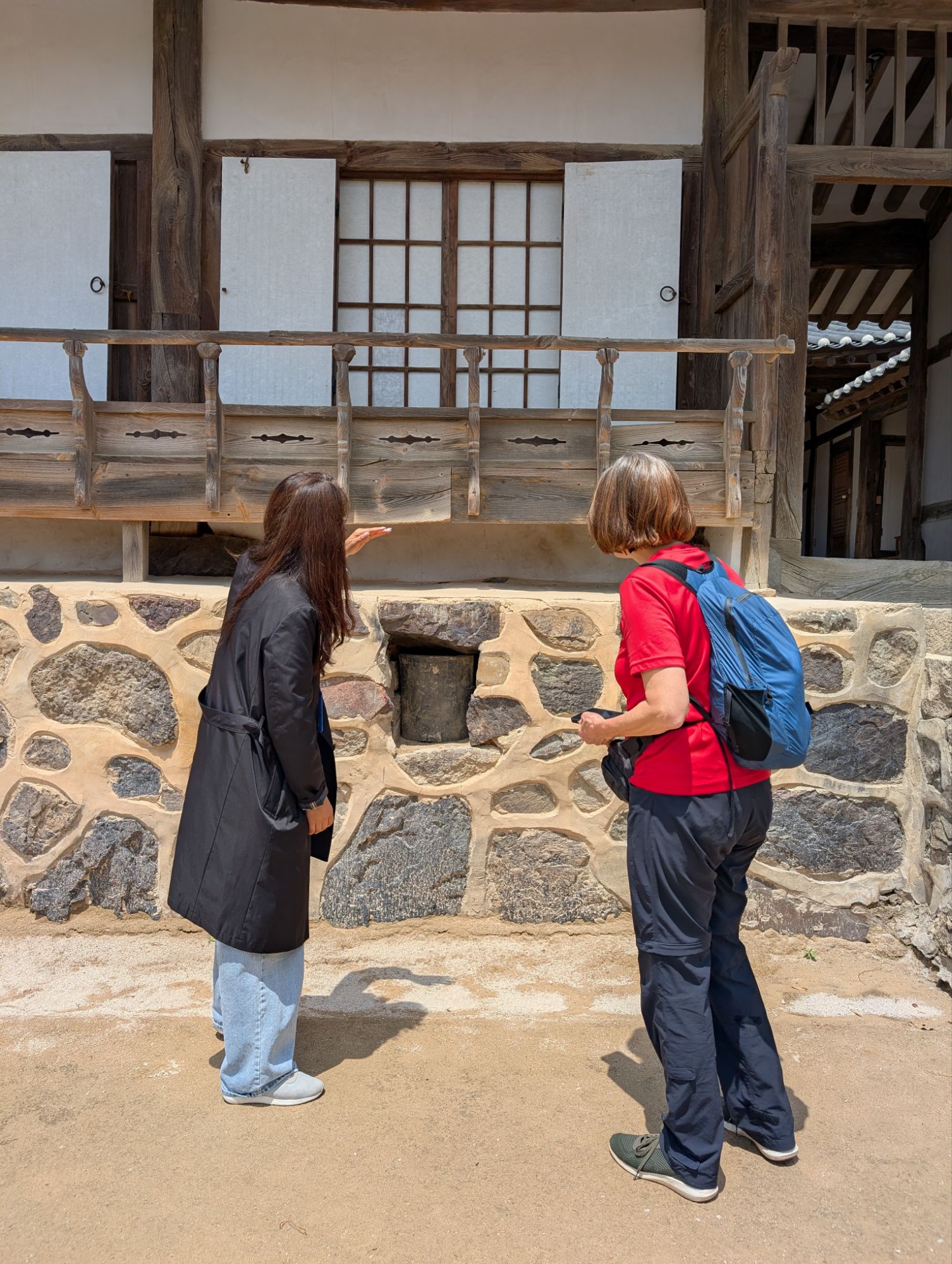
I won’t go into the history apart from the fact the village was founded in the 1400’s by a family who felt it was an auspicious place following the principles of Feng shui (geomancy). Some of the houses are well over 200 years old.
Here I learned that rice thatch has to be replaced every year! I’m guessing that was a cheap and available in times gone by.
Over the days we were in this area, we visited palace grounds, (where there are reconstructed pavilions and ponds) and on a wet day visited the museum. We saw the inside of a burial mound and how they were made. Now these mounds make for very lovely green spaces to walk.


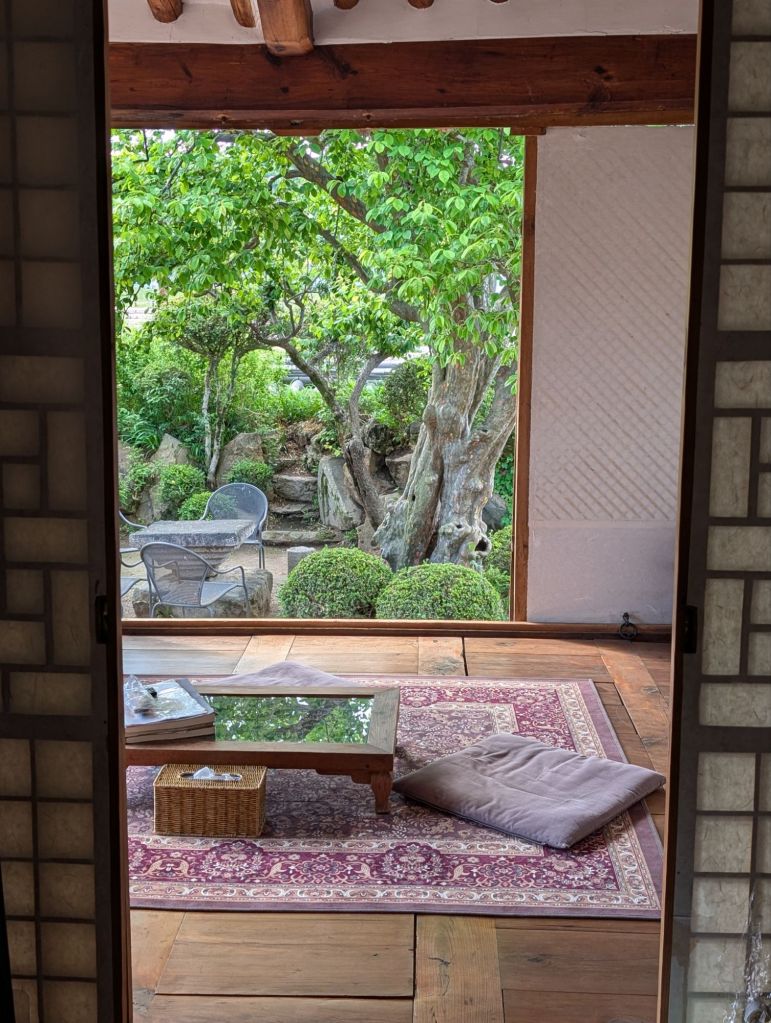
We booked to stay in a Hanok house for one night and ended up staying for two and being moved to a bigger place with two rooms, the only downside in these houses, they have paper walls so sound travels and there was a baby in one near us!
I’m getting quite used to sleeping on futons!

Only designated places can be decorated with Dancheong (painted decorations), these are usually places and temples and are wooden structures. The colours represent the different elements, it also acts as a preservative.

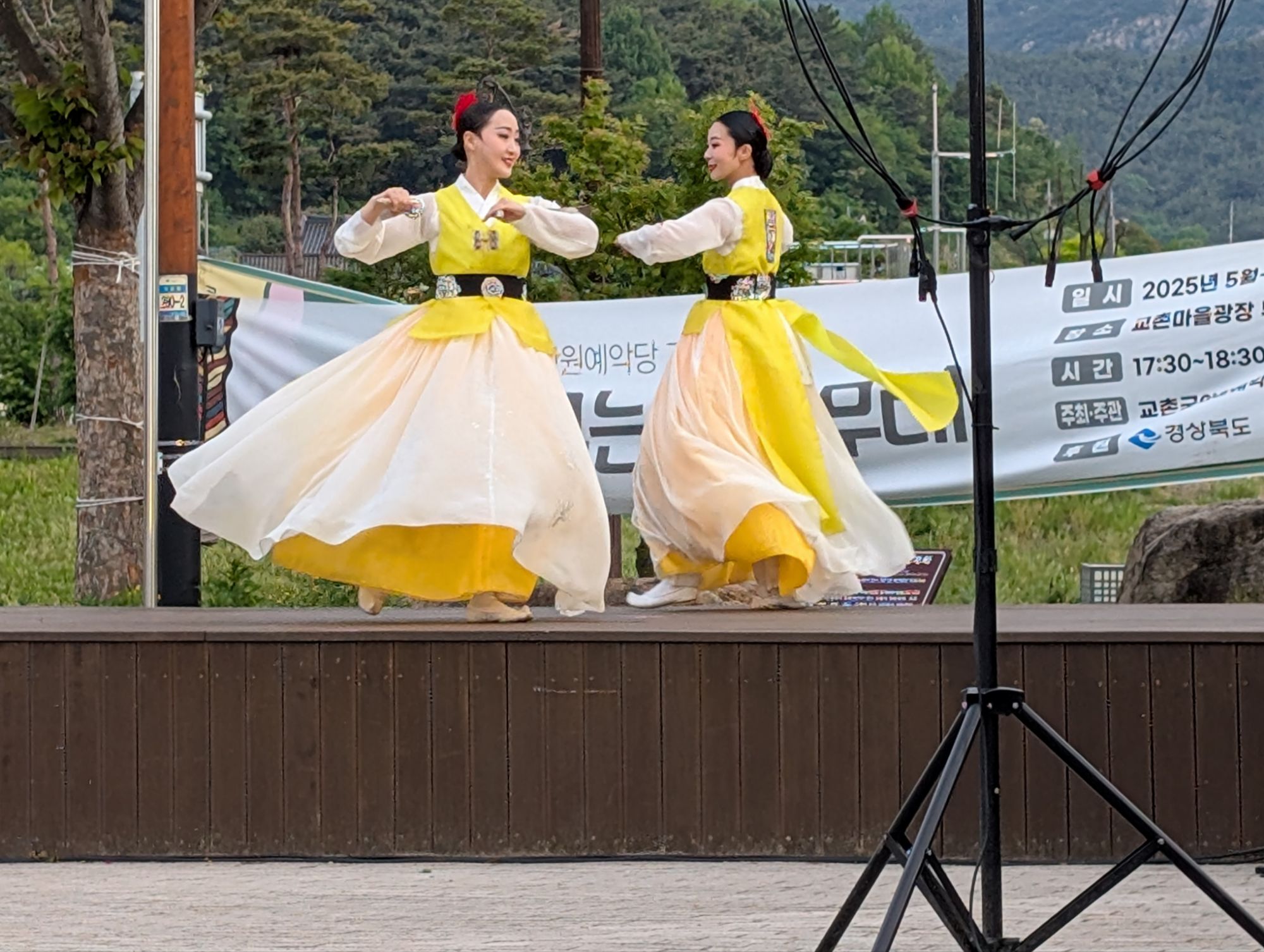
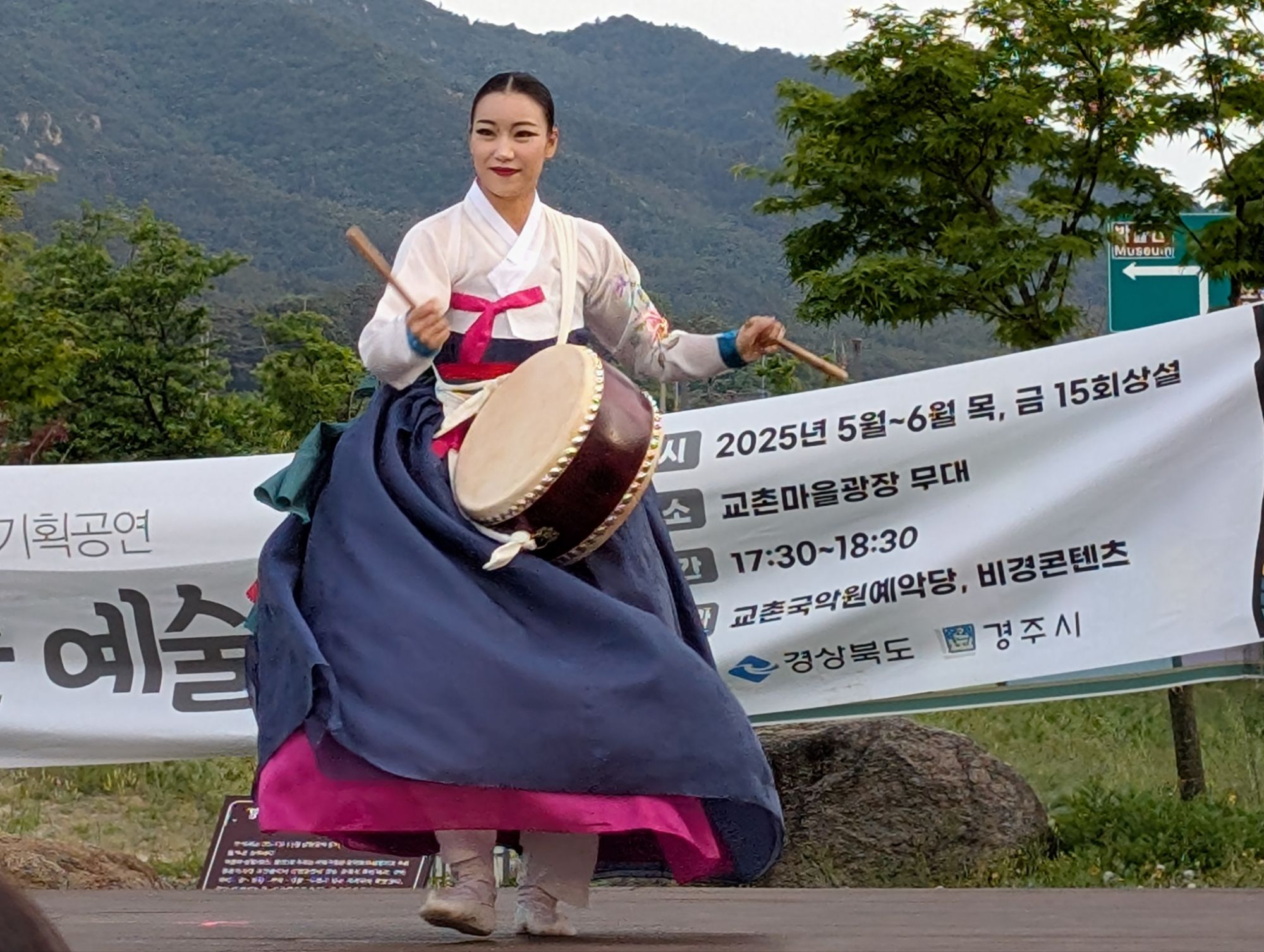
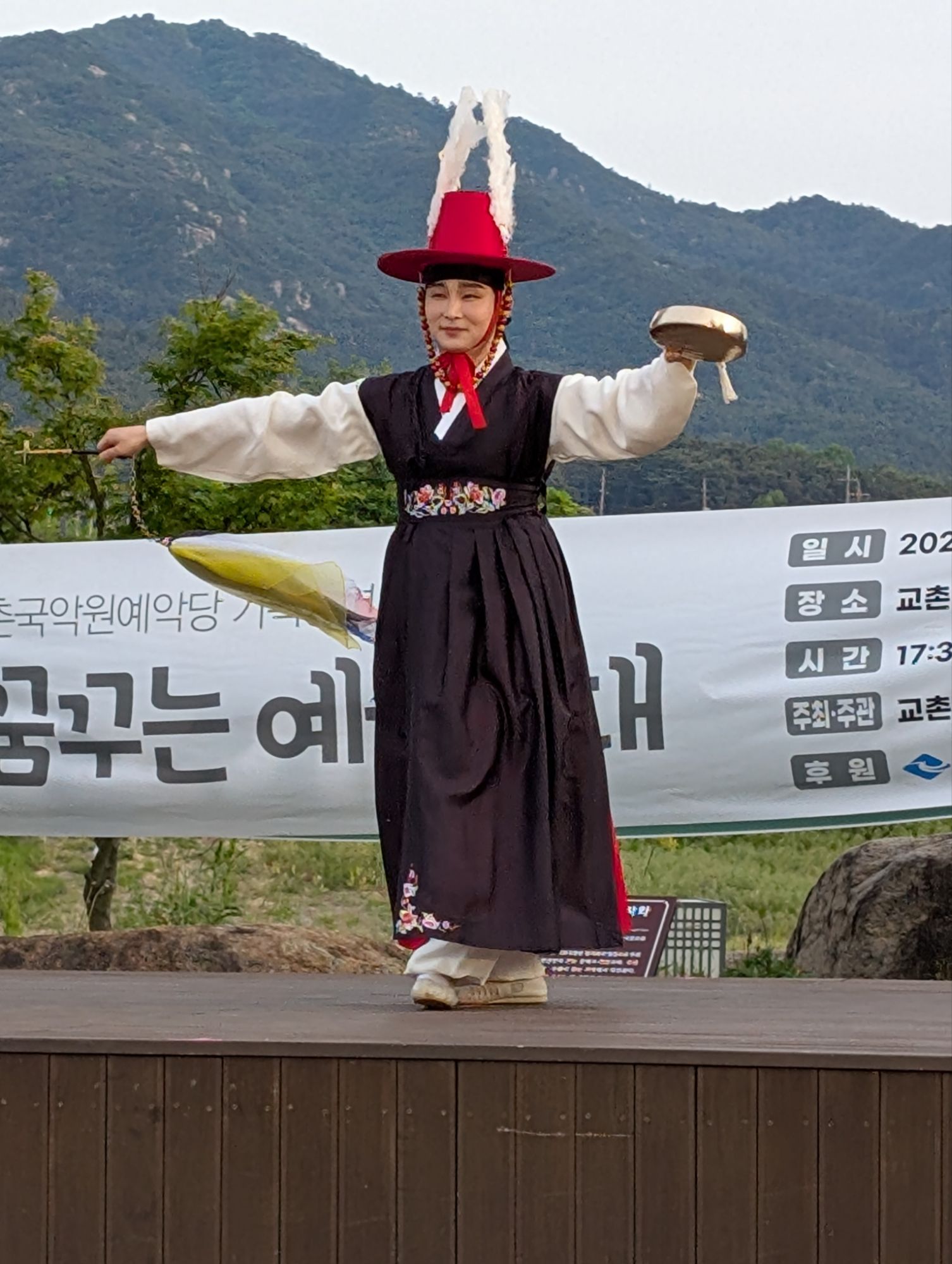
On one afternoon we were wandering in the area of our hotel when we heard music. It’s not unusual to hear music because there is a trend towards piped music in open spaces. This was little different because it sounded like traditional music. That’s when we saw this! I took so many photos and videos!

If you would like to see the burial mounds from the air please look at the link below.
Next Busan!
 The Travelling Bee