Well I’m writing these last few posts from home. I am that far behind but I’m determined to get it written down.
After Peninsula Valdez we drove to the dusty little town of Trelew where we stayed, from there we drove an hour to Punta Tombo. Nature Trek (yes I was checking out their packages in the planning phase) had listed this as a good place for penguins and it wasn’t wrong! We got there around nine in the morning and had the place to ourselves for an hour or so with the exception of hundreds of penguins. I was amazed they travel inland several kilometers to nest in their burrows! The walkway took us through and over this area. The rules were ‘give way’ to penguins and more obviously not to touch them. It was quite something, they were everywhere! Not in vast groups like you sometimes see on the TV, the peak is December to February once the chicks have hatched.
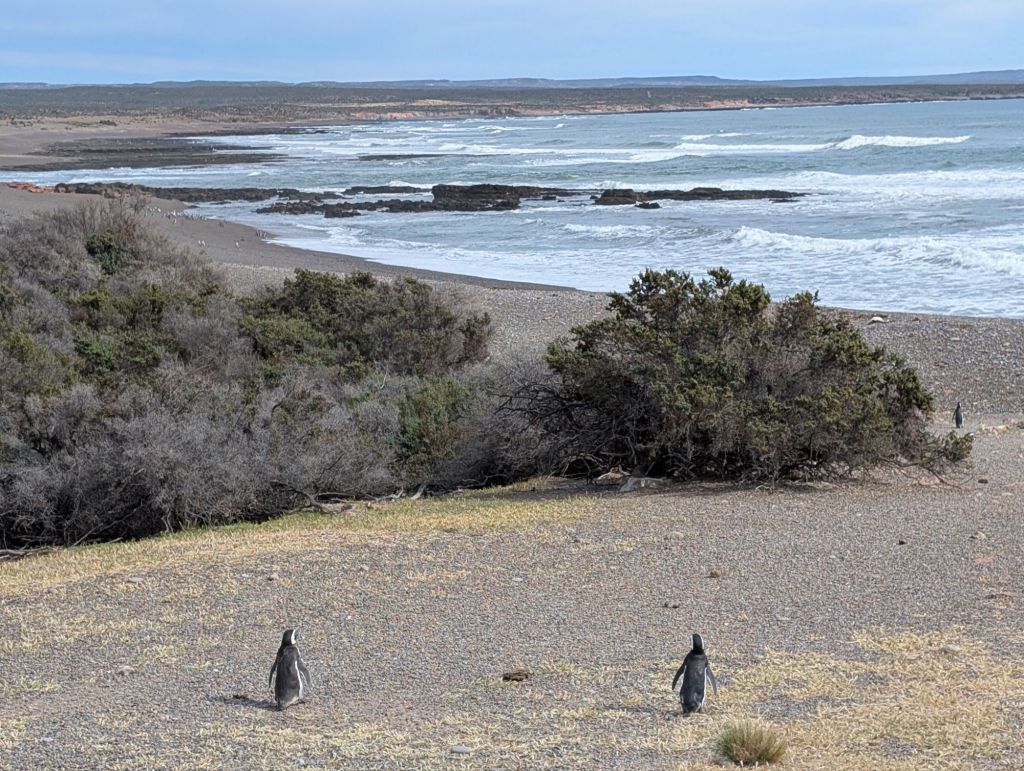
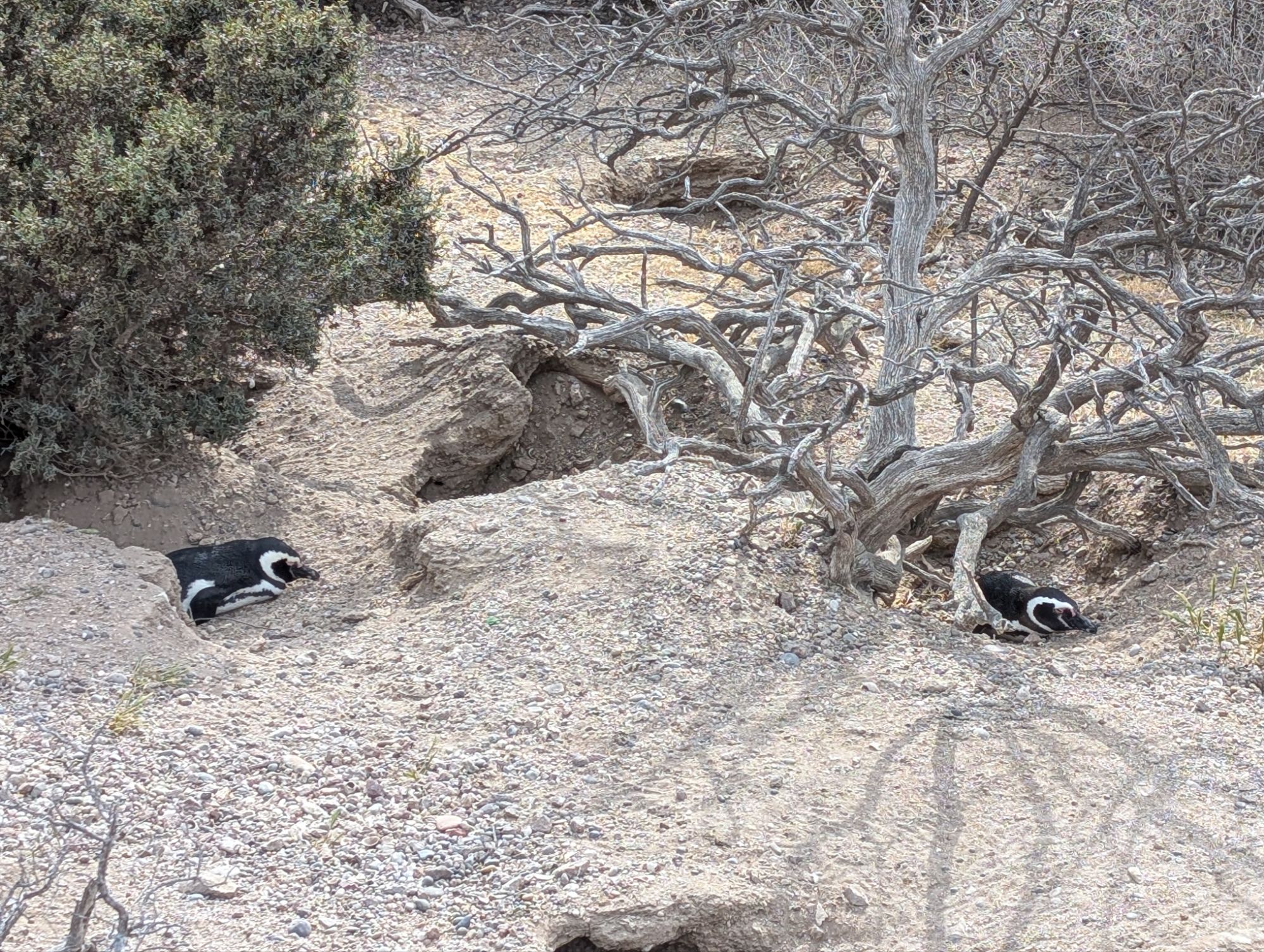
At the coast the walkway took us up above the beach where we could see small groups either heading out to sea or coming back. We did see one on at least one egg!
Then things started to get really interesting as sea lions were patrolling. We became transfixed with this because Sea Lions hunt penguins. The tide was out and we watched a couple of sea Lions upending themselves in the shallows, their tails flapping in the air. What were they doing? We guessed they were fishing for shellfish, sometimes you could see them upright eating something. They seemed to be ignoring the penguins completely. One penguin floated quite close oblivious and then when it saw what was fishing nearby made a panicked swim out of the way.
We were there all day and much later as the tide came back in, we saw the aftermath of a Giant Petrel attack on a penguin, the little body dead, floating and being scavenged by two Petrels. What happened next was funny because two Sea Lions arrived and we assumed they would take the carcass. They seemed young and just appeared to be tormenting and playing with the Petrels, swimming up underneath them and they didn’t seem interested in the penguin. This went on for a long time. We saw a few dead penguins, being eaten by Petrels that day.
We watched a Sea Lion that came into an inlet, it just appeared to be playing. However it caused a returning Penguin to panic. It made the most tremendous moves to avoid it, swimming underwater, darting around and over rocks to get to the shore.
Its strange that the penguins do not see humans as threatening but the Sea Lions are to be avoided at all cost!
Since we have been in this part of Patagonia we have seen quite a range of animals and birds.
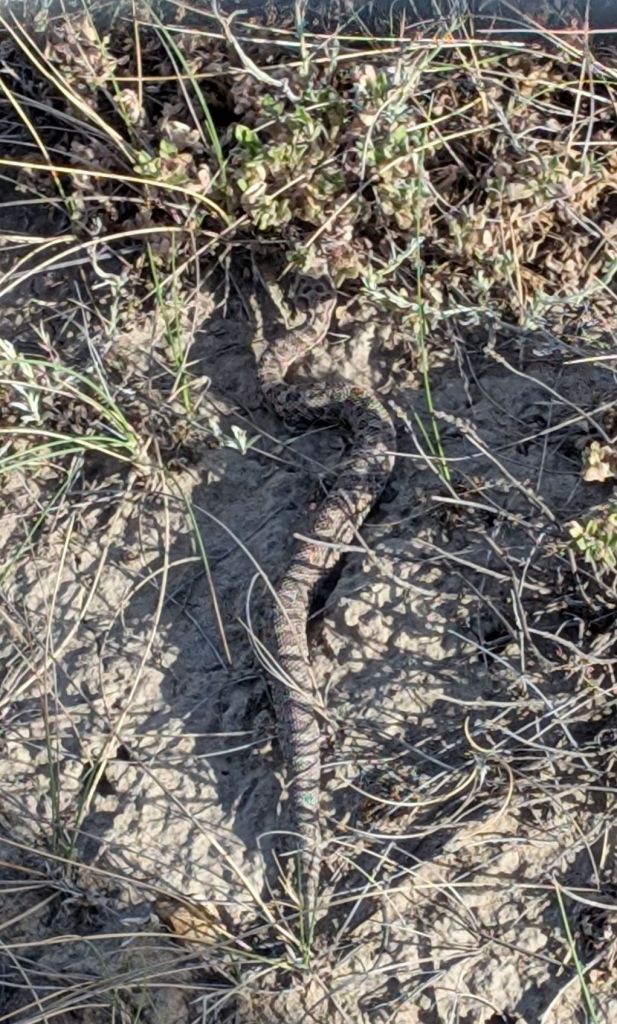
Of the lizards, we saw one snake, a pit viper and this was down to a hawk eyed chap who noticed it, it looked like a stick to me! Not huge but venomous. Thankfully we were on the boardwalk at the time.
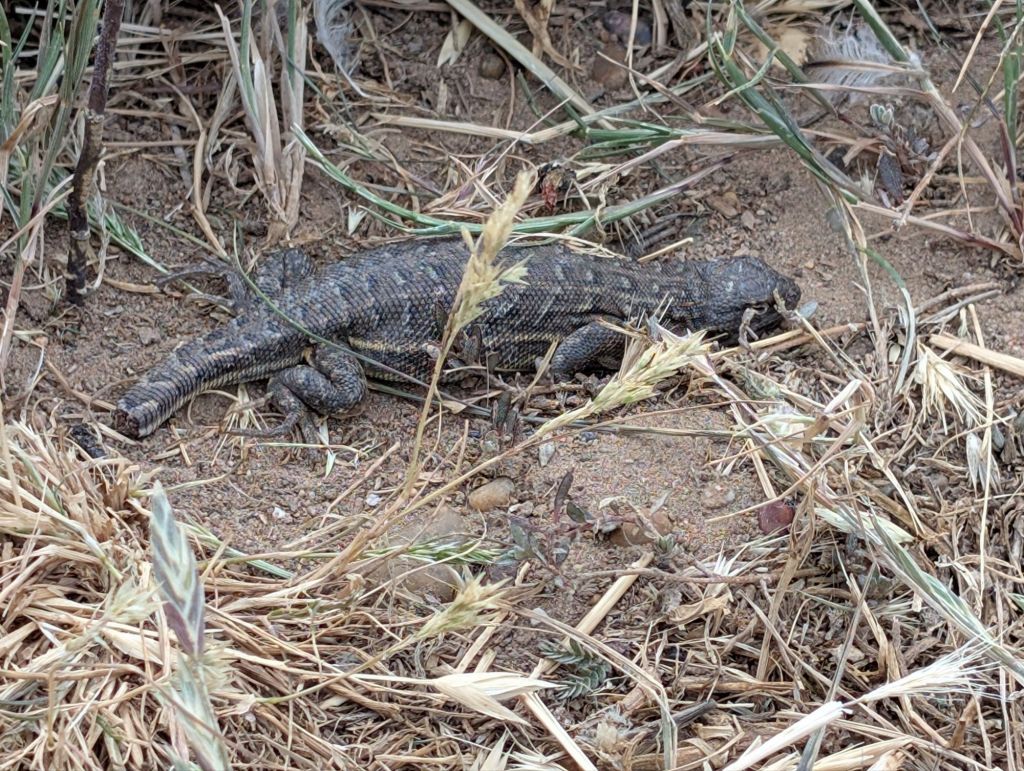

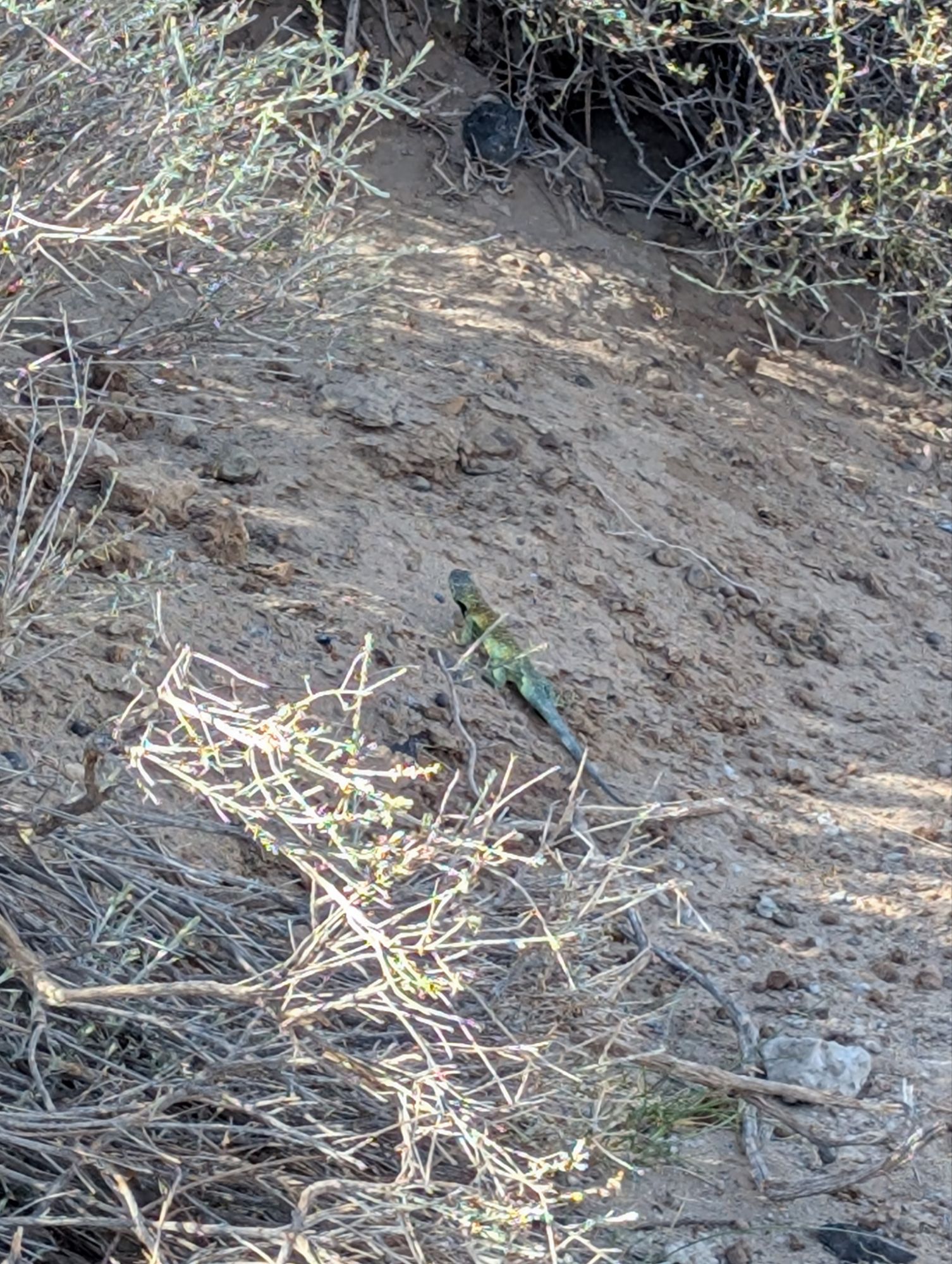
We saw many other birds and lots of the introduced European hares. One morning we also saw the Patagonian mara which is a Cavy. We were chuffed to see that as it’s quite elusive. There were a lot of Southern Mountain Cavy around the car parks but I don’t seem to have captured one on camera!
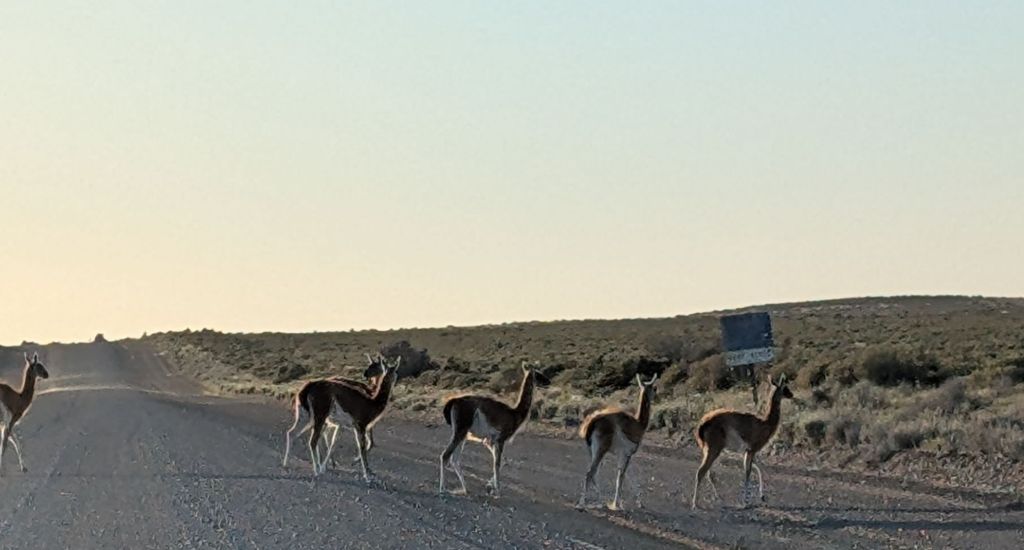
The Guancos are a part of everyday life here, we even met a Kamikazi one that caused me to stamp on the brakes and cause a flurry of dust!
There is one more post on this region but while I’m in wildlife mode I want to mention something. Jayne spent time in the Falklands and described huge amounts of elephant seals with beaches covered in them and it may be that there is less space in the islands but there is a real issue here with bird flu, strangely the effect on the penguin population seems less severe from what I’ve read but the effect on Elephant Seals has been devastating. It’s worth reading the below link to. BBC report.
https://share.google/FMkp21np9EsM5Q1Vr
Well without wanting to leave on a sad note, I’ll leave you with the list of what we saw in this part of our trip. We are not experts but we have tried to get a correct identification. It may doesn’t include the lizards mentioned earlier.
Pampas fox
Variable Hawk
Giant Petrel
Elephant Seals
Sea lions
Armadillo hairy
Patagonian Mocking bird
Carbonated Seirra Finch
Snowy Sheathbill
Imperial Cormorant
Neotropic cormorant
Rock shag
Reoca
Chimango Caracara
Crested Caracara
Great Greab
Elegant Crested tinamou
Kelp Gull
Chilian Flamingo
Rufous-collared Sparrow
Southern mountain cavy
Mara
Steamer ducks
Wren lark
Black oystercatcher
Grey gull bright red legs and beak
Blackish Oyster Catcher
Dolphin gull
White headed steamer duck
Grey hooded Sierra Finch
Next…….A different kind of Whales!
 The Travelling Bee