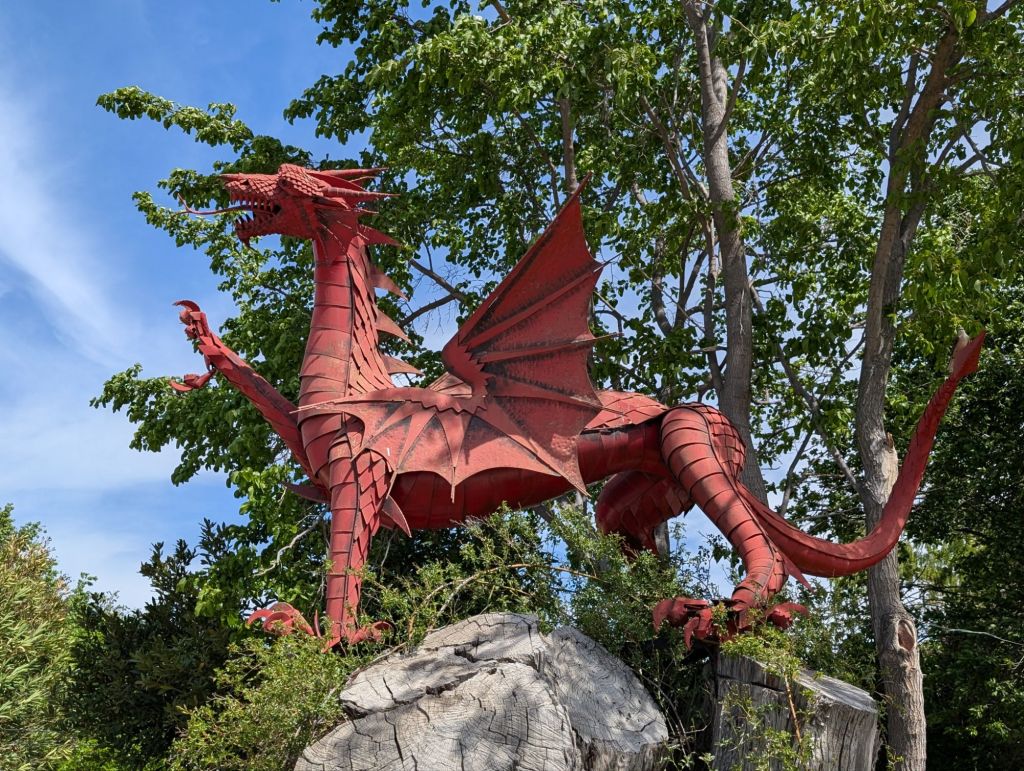
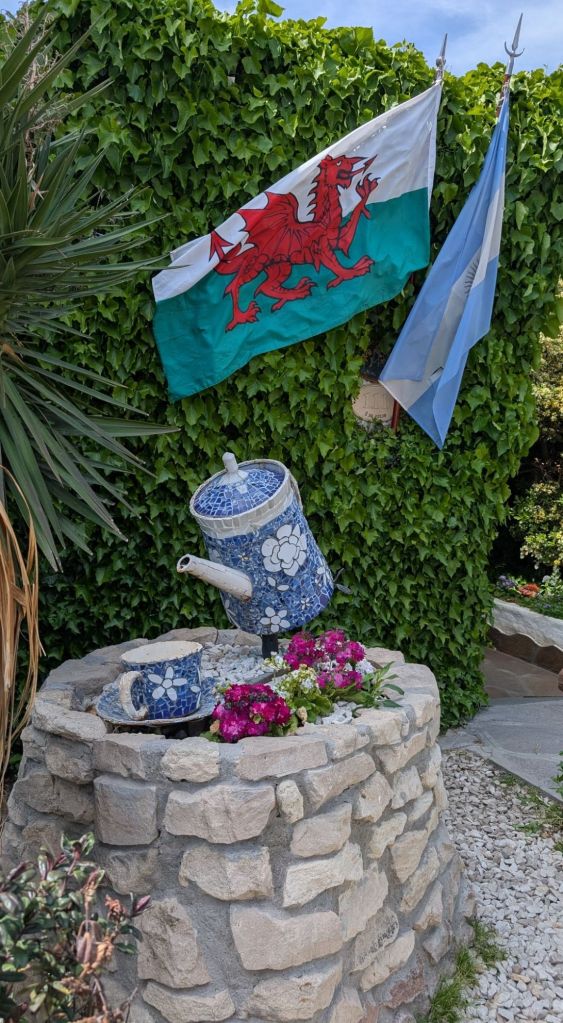
I’ve already mentioned that there is Welsh colony here so perhaps I better explain a bit more.
In 1865 a hundred and fifty Welsh travelled to the Chubut region of Argentina to avoid persecution from the British Government who wanted everyone to speak English and to change what were considered their non conformist Christian beliefs.
A publisher Lewis Jones, the town of Trelew is named after him (Tre being Welsh for town and a shortened form of Lewis) and a politician Sir Love Parry-Jones (Puerto Madyn being named after his Estate in Wales) were notable amongst the settlers and they were allowed land by the Argentinian government despite the land already being occupied by the Tuhuelche people.
It took the settlers over two months to get to this region by sea and I do wonder what they thought when they arrived. There are no rolling green fields here and water is short. Everything would have looked alien to them. Despite this and with the help of the Tuhuelche people (who taught them to hunt), their own ingenuity allowed them to irrigate the land so they eventually prospered and many of the people who live there today have direct descendants from those settlers. Welsh is still spoken by some people and there is a village that is a tourist destination for many Welsh and Argentinians alike, Gaiman. There are a number of Welsh settlements in the region but we only wanted to visit the one.
The village is in a green wooded valley with tall European poplar trees dominating. These were planted as shade and wind breaks initially by the settlers and survive due to irrigation or along rivers. They really stand out because the region does not seem to support trees or anything much higher than 10 feet from what I could see.
Gaiman was quiet and many tea rooms were closed when we arrived. We visited some of the museums including the ‘first house’ which is very much like many old Welsh and (dare I say it) Scottish and English stone dwellings I’ve been to in the UK. Interesting none the less and it must have been very harsh living in an environment with very low rainfall and wide ranging temperatures.
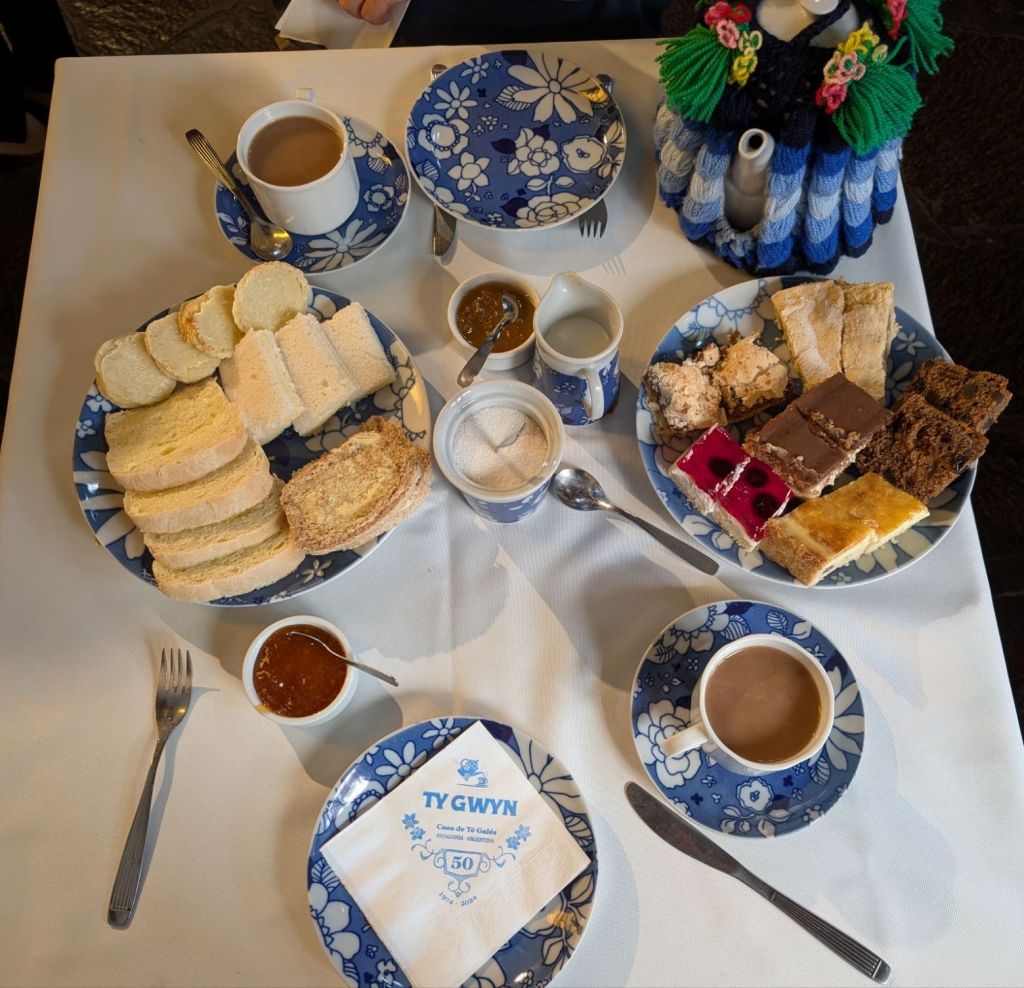
We managed to get an afternoon tea at one of several tea houses. The actual pot of tea was amazing, probably because this is the one thing I miss mostly on my travels. The cakes were an odd selection with possibly bara brith or Torta negra galesa, which I only just found out the place is famous for, it obviously wasn’t notable because I told my friend Trish there wasn’t any, but I can see in the photo that there was!! The jam ‘Alcayota’ was made from a native squash and was very good. Anyway we enjoyed the decadence of the afternoon.
We visited some of the other museums including the old rail station and were given quite an insight into this area and its people, apparently we had just missed the Eisteddfod. It is not lost on me that the Welsh settlers who left Wales because they wanted to preserve their language (amongst other things), didn’t really have parity in a mostly Spanish speaking country. The language remained in the home and community but only in the 20th Century was it revived and now is taught in many of the schools.
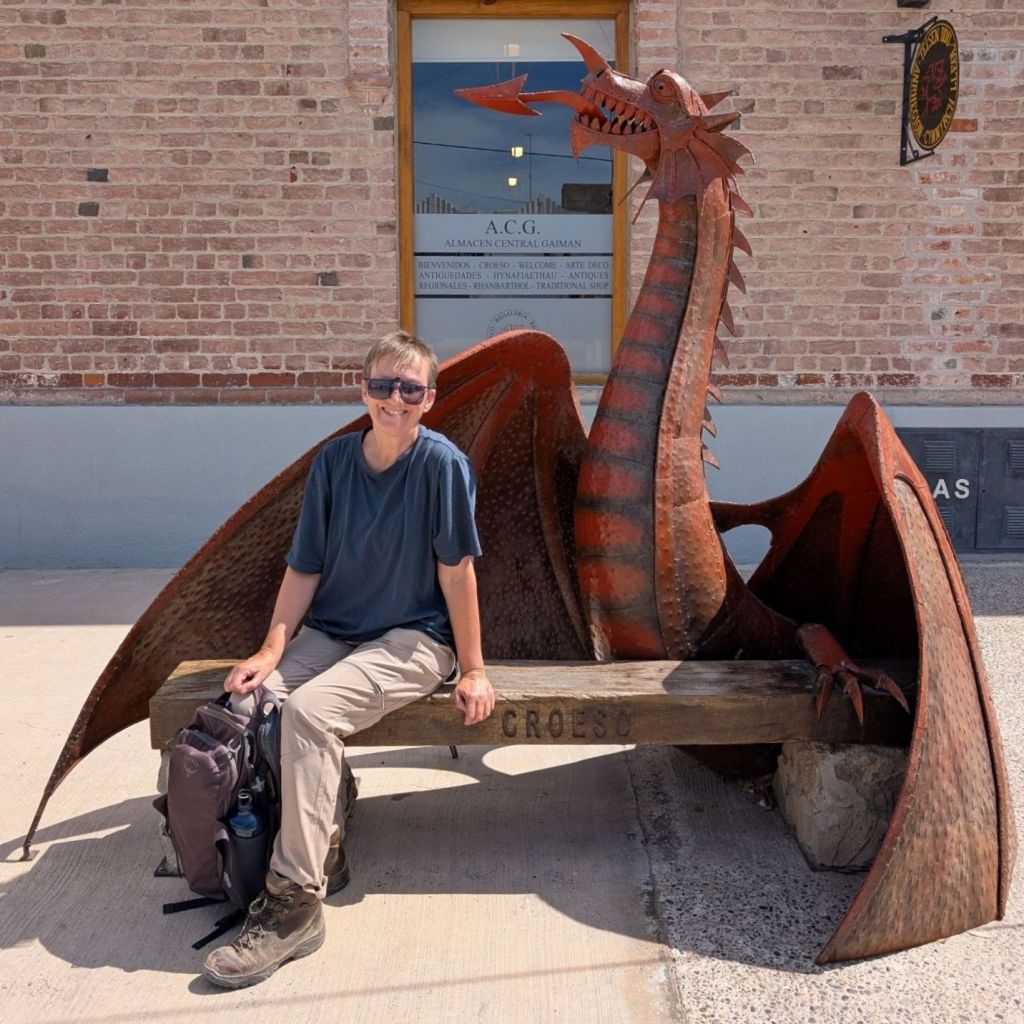
I will just mention Trelew. In the tourist guides it’s a place to miss, it’s a rather boring functional town. It is however its one of the only places to get reasonably priced accommodation in the area. The roads are interesting from a “Duke of Hazard” point of view, speeding in this town would probably lose you your axle as you navigate the troughs which appear to be deliberate as opposed to speed bumps, it was very weird!
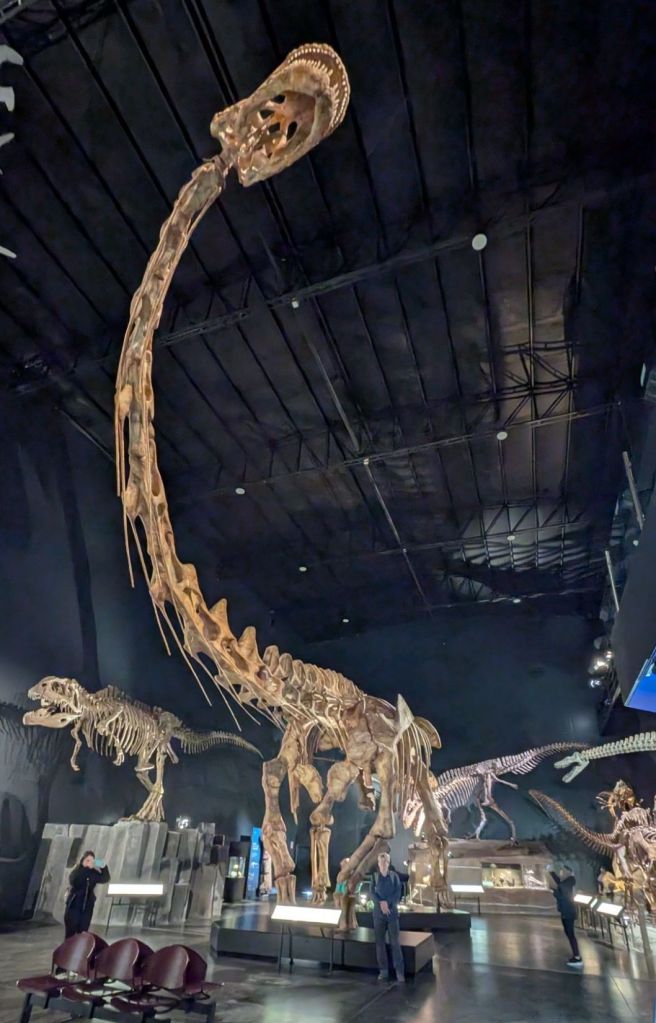
The biggest plus for us here was the Paleontology Museum. It houses the replica (and many real) bones of animals that once roamed Patagonia including Patagotitan mayorum thought to be the largest land animal to have ever lived.

Also worth a visit is Museo Regional Pueblo de Luis which is basically an old railway station complete with old steam engine.
Next……..Butch Cassidy
 The Travelling Bee